Read Rygnar Online

Free Preview (Chapters 1–2)
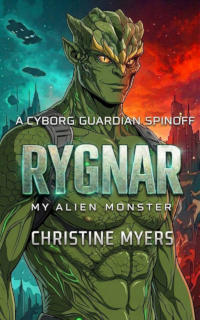
Rygnar sci fi romance book cover free preview

Before you read Rygnar online, I’d like to tell you a little bit more about the story. If you’ve been following my cyborg stories, you already know the world.

A war that nearly destroyed Earth.
Cyborg soldiers created to fight it.
And the promise that if they survived… they would not be alone.

But the war didn’t just leave behind cyborgs.

It left behind something else.


A Different Kind of Warrior

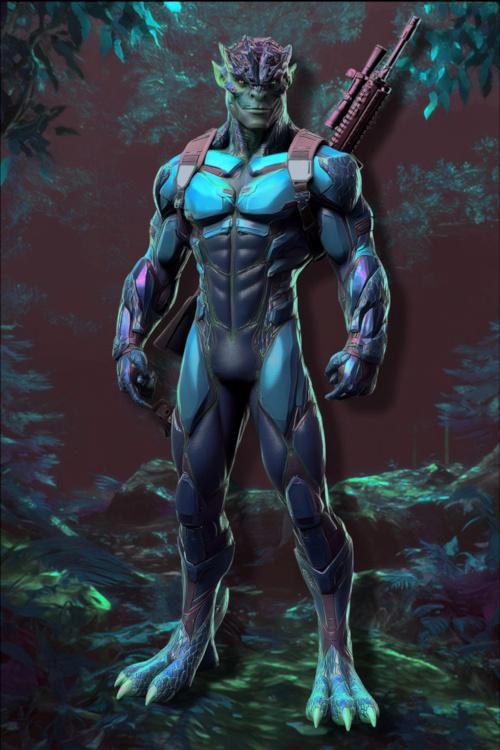
Rygnar is not a cyborg.

He wasn’t created by the Federation.
He wasn’t promised anything.

And yet… he finds himself bound to the same world.
The same aftermath.
The same dangerous pull toward a human woman he should not want.


What to Expect

If you enjoy:

  • Fated mates
  • Protective, dangerous heroes
  • Post-apocalyptic survival
  • A touch of monster romance

You’ll find all of that in Rygnar.


About the Book

He never let himself feel anything… until he found her.


She was supposed to be a courier passing through.
He was never meant to need anyone again.

When Lina’s convoy is destroyed, she barely survives the raiders’ attack—until a dangerous alien pulls her from the brink of death.

Rygnar is a deserter. A former warrior who turned his back on an empire that tried to erase humanity. Hidden deep within a mountain sanctuary, he’s built something fragile: a place where humans and Mesaarkans survive together.

He doesn’t expect Lina to change anything.

He’s wrong.

As raiders close in and old enemies resurface, the sanctuary becomes a target—and Lina becomes the spark that could either unite them… or destroy everything Rygnar has fought to protect.

The bond between them was never part of the plan.

But in a broken world, survival isn’t enough anymore.

They must choose: Safety… Or each other.

A steamy sci-fi alien romance featuring:

  • Protective alien hero
  • Human survivor heroine
  • Forced proximity
  • Slow-burn to deep emotional bond
  • Post-apocalyptic Earth setting
  • Found family colony
  • Touch-her-and-die energy

In a world rebuilt from ruin… love may be the most dangerous choice of all.

This story takes place in the same world as my Cyborg series
but follows a very different kind of warrior.

Chapter One

The Ambush

Lina

We were three wagons short of the Colorado line when the horizon went wrong.

From the driver’s bench, I watched two riders appear where there shouldn’t be riders at all—out of a fold of tawny foothills, sun at their backs, hats pulled low, as if they’d grown straight out of the chaparral. Their horses walked like they owned the road. The lead man’s coat flapped open to show a gun belt he wasn’t bothering to hide.

“Traders?” Ben called from the second wagon.

“Maybe,” I lied, and felt the little courier tag beneath my collarbone pulse its steady thump. The tag always felt hotter when I was afraid—as if my own heartbeat had moved outside my body.

The riders reined up in the track and raised a hand. Polite, like they knew the choreography. The surrounding country was all knee-high grass and scattered boulders, the Front Range mountains lifting blue and cold beyond. Nothing moved except a hawk hanging on a single point of sky.

I flicked the safety strap off the pulse pistol under the seat. “Morning,” I said, because that’s what you say when the world pretends at civility.

“Morning.” The lead rider’s smile was lazy and wrong. “Road ahead is washed out. Bad footing for wagons. My crew can guide you around a side trail—small fee, just to keep your stock safe.”

Ben climbed down. I wanted to shout at him to stay put, but the script had him already in motion. “Appreciate the warning,” he said. “We’ve got schedules.”

“That so?” The rider’s smile didn’t reach his eyes. “Schedules and cargo. Which we can help with. Step down now, ma’am,” he added to me, as friendly as poison.

I didn’t move. He was close enough that I could see the nicks on his gun’s grip, the tally marks someone had carved there. The second rider shifted to show the shotgun across his lap.

Behind us, Hale whispered, “Lina?” and I could hear the prayer hiding in my name.

The hawk folded its wings and dropped like a stone.

“Side trail’s north,” the second rider said. “We’ll lead.”

I breathed out through my teeth, buying seconds. “What’s the fee?”

“Everything,” the lead man said pleasantly, and brought the gun up.

I didn’t think. The pulse pistol leapt into my hand—but the shotgun’s muzzle flared first. Ben spun, a red comet’s tail where his shoulder used to be.

The world telescoped—shouting, hooves, the wagons lurching as reins went wild.

I fired at the shotgun man and missed by a bad inch. He kicked sideways and came down swinging; my shot burned a divot in the road and took a sliver out of his stirrup.

“Down!” I yelled to Hale, but he was already falling.

The lead man fired into the air, and that was the signal.

Men spilled out of the grass and rocks like ants from a kicked nest—half a dozen, then more, masks tied at their necks, blades and clubs, and two more guns.

They didn’t rush the cargo.

They rushed me.

I kicked out of the bench, hit gravel, rolled, and came up under the wagon’s belly with my pistol stuttering. One man dropped. Another howled and kept coming anyway. A hand seized my boot and dragged. I twisted and kicked him in the jaw so hard my toes went numb.

Something struck the wagon’s axle. The old wood screamed. Hale’s breath made wet sounds. The lead man laughed like this was a dance he’d rehearsed.

“We know what you carry. Pretty little tags and pretty little maps. You’re worth more than flour and salt.”

My hand went instinctively to my collar. Courier tags weren’t just ID—they held routes and access codes; the kind of information raiders killed for.

I fired until the pistol whined empty.

The lead man stepped close and stomped the pistol out of my hand. “There,” he said. “No more mistakes.”

He grabbed my coat and yanked me into the wrecked sunlight. The road had become a ring of men and dust. The riders’ horses stamped and snorted. The nearest boulder flashed with mica like a million small eyes.

“Let’s make sure you don’t run.”

He shoved me into a rutted ditch. Someone caught my arms from behind. My shins hit stone; sparks shot up my bones. He crouched in front of me, all smell of tobacco and sweat, the grin now a strip of teeth.

“You gonna be smart about this?”

I spat blood at his boots. It felt like the only thing that was mine.

He sighed, almost disappointed. “Didn’t think so.”

He reached for my throat, fingers going for the courier tag cable to rip it free. I thrashed. The man behind me folded me in like a trap, forearm across my windpipe. Sound narrowed to a mosquito whine. Somewhere, a wagon horse screamed and screamed.

Then the air changed.

The hair along my nape prickled. It was like a cold wind moved through the ditch without touching the grass.

The lead man’s grin stuttered. He looked past my shoulder. The men around the ring turned their heads and went very still.

“Who the—” the one behind me started, and his voice cut off with a wet hiccup.

The weight on my throat vanished. I fell forward into the ditch water, coughed, and crawled on my palms. Boots slid in gravel behind me.

A shape moved—wrong in the way a mountain moves when you try to see it while you’re falling.

Tall. Broad across the shoulders. A dark coat that wasn’t cloth at all but some kind of matte armor that drank the light.

The lead man went for his gun.

The shape didn’t shout. It didn’t warn.

He stepped in, caught the man’s wrist, and the gun went off into the sky. His other hand struck the rider’s face once—precise, almost gentle.

The rider folded like a cut rope.

“Two!” someone yelled. “On the flank!”

I saw it through a frame of grass: the stranger—no, the thing—turning. Something like a blade flashed from his forearm. He moved too fast to be human; the world seemed a step behind him, trying to catch up.

Two men rushed with clubs. He slid between them, took one by the throat, and clipped the second at the base of the skull.

No wasted motion. No joy in it.

Only economy.

“Monster,” someone breathed, and my mouth remembered that word even as my eyes fought it.

I got my knees under me and reached for my knife.

A boot kicked it away.

Another man dropped into the ditch after me, grabbing my hair—then screamed and shot backward as the stranger hit him mid-lunge, a black blur and a crack of knuckles.

The ditch water ran pink around my hands.

“Can you stand?”

The voice came from everywhere and nowhere. Low, roughened, with a strange shape to the vowels—like someone speaking through a mask they’d worn too long.

I ripped my gaze up.

He was close enough now to see the lines of him: armor fitted over a body built for fighting and then punished for it, an odd jointing at the shoulders where plates met, and a helm that hid his eyes behind a dark, slanted lens. His jaw, bare beneath the helm’s lower edge, was a map of small, silvered scars.

“Can you stand?” he asked again, softer.

I nodded because my mouth didn’t trust me yet.

He reached—slowly, palm up—and I flinched before I could stop it.

He froze.

Then he turned his hand so I could see it wasn’t a weapon.

The skin there wasn’t like ours. Darker, patterned—scaled in a way that caught the light like polished stone. Not slick. Not reptile.

Something else.

Something alive.

Behind him, a gun cocked.

He pivoted faster than a blink, body angling to shield me.

The shotgun’s roar punched the ditch.

His shoulder jerked; his armor took most of the blast, but blood spilled dark down the seam.

He didn’t make a sound.

He just moved—low and lethal—and the shotgun man went down clutching his throat, surprised to find it empty of air.

Silence fell like ash.

My ears rang. The only sound left was a horse’s quaking breath and my own ugly rasp.

The stranger turned back to me, blood seeping along his upper arm. He reached again—careful, telegraphing every inch.

When I let him, his hand wrapped my forearm with a pressure that would have been tender if not for the steadiness of it. He pulled me up out of the ditch like I weighed less than the shadows.

“More will come,” he said. “We must move.”

“Ben—” I staggered. Ben lay where the shotgun had put him, eyes open to a sky that was suddenly too bright. I took a breath that hurt. “We can’t—”

He looked, and there was something in the angle of his head—a slight bow that might have been respect.

“I am sorry,” he said simply. “We cannot stay.”

“What are you?” It slipped out raw, ridiculous.

His helm tilted. “Rygnar,” he said, as if that answered everything. Then, gentler: “I will not harm you.”

The raider leader groaned and rolled.

Rygnar’s gaze flicked toward the sound. He released my arm and scooped up a fallen cloak. He shook it once and tossed it over the man’s face—not to hide him, but to keep dust out of his mouth.

Monster, my frightened brain insisted, even as the rest of me watched a man do a small kindness for an enemy.

“Can you walk?” he asked.

“I can run,” I said, surprising myself.

“Good.”

He stooped to snatch up my dropped knife and set it in my palm, handle-first.

“Keep this,” he said quietly. “If you need to use it on me, aim for the throat. Here.” He tapped a seam where armor met skin.

I stared at him. “Why would you tell me that?”

His mouth did something like a smile, brief and tired. “Because you are afraid. And because I do not want to be what he called me.”

Another horse screamed, farther away.

Rygnar’s head snapped up. “Now.”

We ran.

The road fell away behind us, and the foothills took us in—rough and rising. He chose a line that wasn’t a trail so much as a suggestion: up a dry wash, through stands of cedar, over a rib of rock that scraped my palms raw.

Twice he steadied me with a hand at my elbow, and twice he took it away before the touch became anything else.

We climbed until the wind tasted like snow.

The land opened suddenly at a lip of stone. The Front Range surged up in a jagged wall of blue ice and pine, the sky above it a hard white.

Rygnar scanned the lower slopes, quick and methodical. Satisfied, he gestured toward a dark seam in the cliff face barely wider than a wagon plank.

“Shelter,” he said. “For tonight.”

I hesitated at the seam, chest heaving, heart doing the rabbit-against-snare thing it does when death brushes by and then doesn’t take you.

My hand brushed the courier tag through my shirt. It pulsed back.

“Wait,” I said. “I have to—”

I fumbled under the collar, found the tiny pressure switch, and killed the signal.

The tag went cold, and I almost cried from the hush that fell inside me.

Rygnar watched, that still way of his like a held breath.

“Good,” he said. “Clever.”

“Not clever enough,” I said, and stepped into the seam of stone.

He followed.

The world narrowed to stone and the whisper of our boots.

For a long time, there was only our breathing and the faint drip of water—the old bones of the mountain taking us in like we were small and unimportant.

Like we were safe.

I didn’t believe in safe.

But I kept walking.

Chapter Two

Storm-Run

Rygnar

The human moves like someone who has run a long time and has finally run out of road. She keeps pace anyway, jaw set, shoulders a thin line of stubbornness beneath the torn coat.

She does not ask again what I am. Good. There will be time for questions later, if we are not dead.

The seam in the stone opens after fifty paces into a narrow artery, then a pocket. I learned about this place years ago while mapping rock density for the tunneling crew. No one comes here because there is nothing to find—unless you know how to listen. The mountain hums if you let it. I have always heard that song.

I shrugged off my pack and set it on the ground to open it. Pulling out a small lantern, I set it on a ledge and adjust the light to a low gold.

The pocket is scarcely a room—two body lengths across, one and a half deep. The ceiling slopes low enough that my helm brushes it. On the far side, a crack draws a ribbon of air—good. We will not suffocate. The smell of old, damp stone settles in my lungs, calm as rain.

“Sit,” I say, and kneel beside the pack.

She doesn’t argue. Her hands shake as she lowers herself to the floor. Adrenaline. Shock. She tucks her knees in and watches me with eyes that have not yet decided whether I am a rescuer or a catastrophe.

The blood on my shoulder is warm where the pellets found a seam instead of a plate. I open the med kit one-handed, shrugging out of the coat. The sticky pull at my bicep tells me I will need to cut the sleeve away.

“Let me,” the human says. She is already on her knees, moving toward me—then flinching at her own impulse.

I keep very still.

She uses the small knife I gave her. The blade is sharp; she cuts the material carefully. I feel the sting of air, then the cooler sting of gel as I spread it over the pellets and pry them out with the tweezers.

“Can I—” She stops herself, searching my face for permission. “Can I hold this light?”

I tilt the lantern toward her. “Yes.”

She holds it steady, the tremor in her hands quieting as a task gives them purpose.

I dig three pellets out—small lead mouths that had begun to kiss the muscle. I drop them in a tin and seal the skin with a thin line of polymer that tastes like clover and iron.

My hands do not shake. They never do while I am working.

When I am done, I sit back against the stone and exhale through my teeth. The room lists a fraction until my blood recovers. I drink water and pass the canteen to her.

She drinks and does not pretend the swallow doesn’t hurt.

“Thank you,” she says. The words are plain and heavy as stones.

“You are welcome.” I slide the tin away. “Your turn.”

“My—?” The word breaks as she tries to stand. Pain puts her back down hard. Her ankle is already swelling against the boot leather.

“Sprain. Maybe worse.” I gesture. “Foot.”

She hesitates, then unlaces the boot with little gasps of breath she tries to hide.

I ease the leather away and work the sock loose. The joint puffs and blooms under the skin like a storm cloud. I press along the bone carefully with my thumb.

She makes a sound between a hiss and a curse when I find the tenderest line.

“Not broken,” I say, and she sags as if I have told her the war is over. “But you will not run on it tonight.”

I spray the joint with numbing frost and wrap it in an elastic bandage, anchoring it with a strip of adhesive.

When I look up, she is watching my hands the way people watch knives—the way they watch a surgeon’s hands when the decision is already made.

“You’ve done this,” she says softly. “A lot.”

“Yes.”

“For humans.”

“And my own.” I pull the boot back on, loose. “Pain is not picky about species.”

Something loosens in her face. It changes the shape of her mouth and the angle of her eyes. She is very young in this light—and old in the set of her shoulders.

“I’m Lina,” she says after a moment, like a bridge she chooses to build. “Lina Carter. CRENA courier.” Her fingers touch the hollow at her collarbone where the tag lies dark now. “Was.”

“Rygnar,” I answer. She already knows my name, but names have weight when you give them; it matters that I do. “No longer a soldier. Miner. Medic, sometimes.”

“Sometimes,” she repeats.

Her mouth learns my name without saying it—lips shaping the consonants, teeth catching the unfamiliar sharp in the middle. There is no fear in the mimicry. Only curiosity.

It is a good sign.

Outside, the wind changes key—lower, wetter. The seam behind us draws a damp breath. The storm will arrive before full dark.

“Eat,” I say.

I pull dried meat and hard bread from the pack, break both into smaller pieces, and put them in her hands so she does not have to ask.

She eats like a person who has remembered she should.

I force myself to do the same.

Fuel now. Questions later.

When we are done, I lower the lantern and set a heat canister between us. It throws a small circle of warmth that smells faintly of resin.

The human wraps her arms around herself—then stops, embarrassed at being cold in front of a stranger.

I unsling the outer scarf from my kit and offer it across the heat.

She blinks. “You’ll—?”

“I do not get cold as you do,” I say.

That is true enough.

She takes it. Her fingers brush mine accidentally.

Reflex sets my spine like a bowstring—old controls snapping into place: do not crowd, do not startle, do not move fast.

She notices. Of course she does.

Her gaze flickers to my throat.

She has good instincts.

“Back there,” she says after a while, voice small in the dim, “you told me where to aim. If I had to.”

“Yes.”

“Why?”

Because I would rather be cut by you than become the thing he named me.

“Because you were afraid,” I say instead. “And I did not want you to have to guess.”

She nods slowly, like the answer is a shape she can hold.

The heat canister clicks softly. The mountain settles and creaks.

“Those men,” she says. “They weren’t traders. They knew about courier tags. They said I was worth more than salt.”

Rygnar’s story is just beginning.

Continue reading in Kindle Unlimited:
April 17th
Why I Wrote the My Alien Monster Series

The Cyborg Universe Came First

When I first began writing in the Cyborg Universe, my focus was on survival, war, and the fragile process of rebuilding a broken world. Humanity had endured devastation from a brutal alien attack , and the cyborgs—once weapons—were learning how to become something more.

But not every character in that world was easy to love.

Stalker, Book 3 of the Cyborg Ranger Series, introduced a rebuilt cyborg who had been used as a spy among the Eastern Overlords. He wasn’t a traditional hero. He operated in shades of gray, making choices that were sometimes necessary… and sometimes questionable. In the course of that story, his wife was left vulnerable, and she was ultimately sold to a Mesaarkan.

That moment stayed with me.

The Interstellar War had Two Sides

Because while the world I created was harsh and often unforgiving, the people in it—human and alien alike—still deserved something better.

In Max Cyborg Ranger, that thread continued. Max encountered this morally complex man and, despite everything he had done, chose not to punish him. Instead, he allowed him to return to his wife—because protecting her was the most important thing.

That decision reflected something deeper about the world I was building: strength wasn’t just about power. It was about knowing when to show mercy.

As I continued expanding the universe, I started asking myself a different question:

What about the aliens?

If there was a powerful, totalitarian empire sending its people to fight endless wars… wouldn’t some of them resist? Wouldn’t some refuse to become weapons?

That question led to the creation of the Mesaarkan deserters.

These weren’t conquerors or villains. They were warriors who had turned away from an empire that demanded obedience at the cost of morality. Many of them had been forced into conflict, shaped by violence, and burdened by what they had been made to do.

When they came to Earth, they weren’t looking to dominate.

They were looking for something else.

A chance to rebuild.
A chance to choose their own path.
And, for some of them… a chance to find connection.

That’s where the My Alien Monster series was born.

These stories are about powerful, non-human warriors—beings who might look intimidating, even dangerous—but who are capable of loyalty, restraint, and deep emotional bonds. They are protectors, not conquerors. Survivors, not tyrants.

And when they meet human women who are just as strong in their own way, something extraordinary happens.

Not just romance.

But healing.

Because in a world that has seen the worst of what both humans and aliens can do… these relationships represent something better.

A choice to protect instead of destroy.
To trust instead of control.
To build something lasting from the ruins.

That’s the heart of the My Alien Monster series.

And it’s why I keep coming back to these stories. The second book in the series, Rygnar, is scheduled to be released on April 17th and will soon be available for preorder.

Christine Myers

A New Cyborg Guardian Serial Begins:

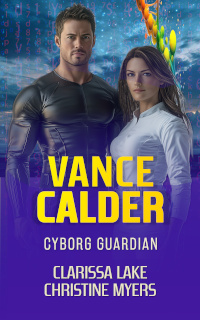
Vance Calder

Cyborg Guardian Serial

Something new has arrived in the Cyborg Guardian universe.

I’ve started releasing a serialized story featuring a new Guardian hero—Vance Calder—and the scientist whose work may determine the fate of Nova Hollow.

Vance is sent to a remote laboratory fifty clicks from the settlement to assess a potential threat. Command believes the facility may be too dangerous to exist.

Instead, he discovers Thea Kovar, a scientist who has spent eight years alone maintaining a system that could either save lives… or destroy them.

And according to Guardian protocols, she is also his genetic mate.

Now Vance faces an impossible mission: protect the woman and the system keeping Nova Hollow safe—or follow orders that could eliminate both.


Start Reading the Cyborg Guardian Serial

The first three episodes of Vance Calder are now available to read.

You can jump into the story here: Vance Calder


How the Serial Works

New episodes will continue to appear as the story unfolds.

Newsletter subscribers will receive updates whenever new chapters are released, so if you’d like to follow the story from the beginning, this is a great time to jump in.


If you enjoy Cyborg Guardians, high-stakes missions, and fated mates, I hope you’ll come along for the ride.

Welcome to Vance Calder’s story.

Behind My Cyborg Romance: A Personal History Written in Alloy and Memory

Cyborg romance didn’t begin for me as a grand plan. It began the way many creative obsessions do—quietly, unexpectedly, with a spark that formed long before I realized it would become an entire universe. Long before I ever wrote a cyborg hero, I was already captivated by science fiction and the emotional possibilities within it.

My love of science fiction didn’t begin with books—it began on the floor of our living room, watching Superman on a black-and-white television.
Strange visitor from another planet with powers beyond those of mortal men.

Those words lit a spark in me before I even understood what story or genre meant. A few years later, when I was about eight, I watched the 1951 film The Day the Earth Stood Still. I was mesmerized. Even then, I wanted Klaatu—the alien—to fall in love with the boy’s mother. Of course, that didn’t happen, but the idea stayed with me.

Looking back, I think Superman and Klaatu were the first seeds of the sci-fi romance author I would eventually become.

Years later, I watched the 2008 version with Keanu Reeves. Critics weren’t kind, but I loved it. The impact of that original story never left me. It shaped the way I see aliens, humanity, connection, and the tension between fear and wonder.

Where Cyborgs First Entered My Imagination

My fascination with cyborgs started even earlier than I realized.
It was the era of The Six Million Dollar Man.

Steve Austin—test pilot, survivor of a catastrophic accident, rebuilt with biomechanical limbs and enhanced senses—was my first exposure to what we would now call cybernetics. The show called them “bionics,” but they were close enough to the cybernetic enhancements I’d later give my own cyborg heroes. It was impossible not to imagine: what would it be like to be rebuilt stronger, faster, tougher… and still so deeply human?

Even today, I can see the roots of my cyborg romances in that series.

Growing Up in the Shadow of Loss

My childhood was a mix of good memories and painful ones.
My parents split when I was around four. Not long after, my mother met someone and decided to move to California with him. The problem was, I couldn’t go—I needed surgery that was the difference between life and death.

My grandparents stepped in. They told her she could leave, but she wasn’t taking us with her.

I didn’t understand the details until much later, but the result was the same:
my mother left for California without me or my brothers.

She visited me once in the hospital, and then she was gone again.
While my grandparents gave us a loving, stable home, I lived with the quiet ache of abandonment. That wound never fully healed. It shaped me, and it shaped the characters I would one day write.

Looking back, I can see how those feelings of loss and displacement seeped into The Aledan Series, where Chelle grieves her mother’s death and Hankura is sent away to another world for his own safety. Fiction often reveals the truths we carry.

Early Adulthood: Love, Hope, and Hard Turns

I married at nineteen and had one child, full of hope for the future. But life had other plans.

My husband developed severe back problems that required major surgery and ended his career. I went to work. Then I lost my job. We moved to the city. Then to the country. Living in the mountains near West Virginia was one of my favorite chapters—growing vegetables, making homemade bread, raising our daughter with a simpler way of life.

But my husband lost his job again.
We moved again.
And that was the beginning of the end of our marriage.

A few years later, I became a single mother trying to build a life for the two of us. During that time, I was shopping The Aledan Psion to publishers and thought I’d finally found one—an independent publisher who loved the story. But his business never got off the ground, and the deal vanished.

Reality hit hard.
I became a small-town newspaper reporter for about nine months, but the pay didn’t cover basic bills. My estranged husband could barely support himself, let alone help us. I crashed into a deep depression and couldn’t work for a while.

Rebuilding: One Step at a Time

Therapy helped pull me back.
Three years of unpacking old wounds, learning resilience, and trying to breathe again.

When I was finally able, I went back to school—determined to become employable and give my daughter a stable home. I took writing courses and computer classes. I hated the math in programming, so I dropped that track, but I learned computers well enough to stand out.

I worked in a factory for two years while finishing school.
I taught myself transcription.
I learned secretarial skills.

Eventually, I walked into a temp agency and walked out with jobs in clerical work and computer operations. That led to a position in a doctor’s office where I stayed for ten years—despite the fifty-mile commute through brutal Western New York winters.

Later, I found a job closer to home and spent another fifteen years in a hospital administrative department. Through it all, writing stayed on the back burner.

But not forever.

The Return to Writing — and the Shift Toward Cyborgs

Somewhere in those years—maybe during a quiet evening, maybe during a long winter—I started writing again. Retirement was coming eventually, and I knew I wanted to become an indie author. That dream had never died; it had only waited.

By then, I had completed two space opera romance series and fully established my Aledan Universe.

But when I discovered Cynthia Sax’s early cyborg romances, something clicked. The stories reminded me of everything I had loved as a child:

  • Superman’s alien loneliness
  • Klaatu’s quiet otherness
  • Steve Austin’s cybernetic rebirth

It all converged.

I borrowed some elements common to the genre—like genetic mates—but beyond that, everything diverged into the universe that already lived inside me. My cyborgs were born from the ashes of the Aledan war, from humanity’s desperation, from the science and trauma and resilience woven through my worlds.

And maybe, if I’m honest, from my own longing.

**Fated mates. Genetic bonds.

A love that cannot abandon you.
A partner who will never leave you behind.**

After failed romances and the lingering shadow of early abandonment, it’s no surprise my heart turned toward stories of men who love fiercely, permanently, and without hesitation. That theme isn’t accidental—it’s emotional truth, transformed into fiction.

Where Cyborg Lore Came Together

The final spark came when I read a story where cyborg warriors were promised mates once they returned home from war. Something about that concept struck home—deeply and personally. It connected with the unresolved pieces of my own past and the emotional scars that shaped me.

From that moment, everything in my universe aligned:

  • My world had cyborg soldiers engineered for a war against the Mesaarkans.
  • That war created a surplus of never-awakened cyborgs in stasis.
  • These men survived a conflict they never truly lived through.
  • And they were waiting—quietly, unknowingly—for a chance at life, identity, and love.

It all fit.
It all made sense.
And that’s how my cyborg romances truly began.


Part 1 — How Cyborg Romance Found Me

Cyborg Vyken Dark is looking for survivors in the Chicago ruins.

Cyborg romance didn’t begin for me as a grand story plan. It began the way many creative obsessions do—quietly, unexpectedly, with a seed that took root long before I realized what it would become.

Long before I ever wrote a cyborg hero, I was already captivated by science fiction. Not just the starships and alien worlds, but the human stories: outcasts trying to belong, survivors rebuilding after loss, ordinary people discovering extraordinary strength. Those themes shaped my imagination from childhood and later became the emotional foundations of my romance worlds.

But the road to my cyborg universe truly began when I started reading cyborg romance—particularly Cynthia Sax’s early series. Her stories presented a new kind of hero: powerful, enhanced, engineered, but deeply emotional and vulnerable. These men weren’t just soldiers—they were survivors longing for connection. I devoured every cyborg romance I could find, but at the same time, something in my own writing universe had already prepared the ground for cyborgs long before I wrote the first one.

How My Aledan Universe Laid the First Foundation

Years before my cyborgs took shape, I was deep into creating the Aledan Series, with a richly detailed history that stretched across galaxies and centuries. In that timeline, Earth suffered a catastrophic alien retaliation after a disastrous first-contact mission. A geological expedition trespassed on an alien world, panicked, and murdered nearly the entire native team. Only one alien escaped and reported the atrocity to his people.

The response nearly destroyed Earth.

Cities were devastated. Communications collapsed. Entire populations were displaced. Humanity was forced into survival mode.

That war—its destruction, its trauma, and its long aftermath—became the backdrop for my future cyborg world. The idea that humanity had barely survived left an enduring question:

How would a fractured, wounded Earth defend itself if the threat returned?

The answer, at least in my universe, was the creation of cybernetically and genetically enhanced protectors.

Why Cyborg Romance Felt Like the Perfect Match

Science fiction romance blends two genres I have always adored: the limitless wonder of sci-fi and the emotional resonance of romance. Cyborgs sit at the perfect intersection of those worlds. They allow a writer to explore:

  • What does it mean to be human?
  • Can a man engineered for war learn to love?
  • How does trauma shape identity—and healing?
  • What happens when the world you were built for no longer exists?

A cyborg is a contradiction: part machine, part man, designed for combat yet capable of profound tenderness. Writing romance for characters like that is endlessly rewarding, because their journey isn’t just about falling in love. It’s about rediscovering their own humanity.

The deeper truth is that these themes echo parts of my own life.

Growing up, I never quite fit in. My mind was always in the stars, in comic-book universes, in worlds filled with psions, aliens, and heroes who battled impossible odds. I often felt like the odd one out—too imaginative, too different—and those feelings became part of the emotional heart of my cyborgs. They are outsiders seeking belonging. They are men created for a purpose who must find a life beyond it.

The First Threads of the Cyborg Universe

Once I realized the alien war from the Aledan timeline created a natural need for enhanced defenders, the structure of my cyborg universe formed quickly.

During the war:

  • Earth didn’t know how long the conflict would last.
  • Cybernetic soldier production continued nonstop.
  • Research and development pushed new breakthroughs.
  • More cyborg units were built than could be awakened immediately.

The plan was simple:
Keep making cyborgs until Earth no longer faced extinction.

Some cyborg units were awakened immediately and became frontline soldiers.
Others were kept in reserve—fully developed, fully programmed, and preserved in stasis—waiting for the moment they would be needed.

But the war ended abruptly.

Earth survived, but civilization was shattered. The infrastructure to support millions of people vanished. Entire industries collapsed. Rural enclaves formed out of necessity. Cities became ruins or rebuilding hubs.

And in hidden stasis vaults in a secret underground facility near Chicago and one in Peru thousands of cyborgs remained asleep, never deployed, their lives on pause until someone awakened them.

This is one of the most important aspects of my cyborg universe:

**None of the cyborgs were deactivated.

They were never awakened in the first place.**

When Vyken Dark returned to Earth, he did so knowing that countless cyborgs—his brothers—were still waiting in stasis chambers.
Waiting for a world that had almost been destroyed.
Waiting for a purpose that no longer existed.
Waiting for a chance at life, connection, and love.

This truth shapes every cyborg series I write.

Why These Stories Matter to Me

Cyborg romance gives me a canvas for exploring deeper emotional themes:

  • Survival after trauma
  • Rebuilding when everything is lost
  • Finding love in the ruins
  • Learning to trust again
  • Creating community out of chaos

All of these reflect human resilience. They reflect my own journey through difficult moments of life, and maybe that’s why the stories resonate with readers as well. My cyborgs aren’t just warriors—they are symbols of hope.

In the ashes of a broken society, they rise.
In the loneliness of being engineered for war, they find love.
In the uncertainty of awakening without a purpose, they create new futures.

What This Blog Series Will Explore Next

This is only the beginning. Over the next four posts, I’ll take you deeper into:

Part 2 — A Personal History Written in Alloy and Memory

How childhood experiences, outsider feelings, and early sci-fi fandom shaped my universe.

Part 3 — Building the Cyborg Guardians Universe

Behind-the-scenes worldbuilding, including Gretchen, Montana and the timeline connecting each series.

Part 4 — Cyborgs, Trauma, and the Genetic Mate Bond

Why the mate-bond trope is so powerful and emotionally resonant.

Part 5 — Rebuilding Love After the World Falls Apart

The emotional thesis of my cyborg romance worlds and why I will always write them.

Worldbuilding Spotlight: The Cyborg Stasis Vaults

During the war, stasis vaults were built deep underground—reinforced chambers designed to preserve fully developed cyborg soldiers until deployment. These vaults were temperature-controlled, EMP-shielded, and self-powered, ensuring that even if Earth’s energy grid failed, the cyborg units inside would remain stable.

Most vaults contained:

  • 100 to 300 cyborg soldiers
  • Training data modules
  • Medical nanite reserves
  • Genetic mate-bond compatibility records
  • Emergency awakening protocols

Many cyborgs in your books—Raven, Steele, Bodee and Axel—come from these very vaults. Their lives didn’t begin in childhood like ordinary humans. Their first breath, their first heartbeat outside the chamber, and their first moment of free will all happened after the world they were made to defend had already collapsed.

These men were built for war…
…but destined for something else entirely.

Closing Thoughts for Part One

Cyborg romance found me long before I realized it. It lived in the stories I loved, the universes I created, and the emotions I carried from childhood. Now, writing these series is one of my deepest joys—and I’m thrilled to share the heart behind them in this 5-part blog journey.

Stay tuned for Part 2:
“A Personal History Written in Alloy and Memory.”

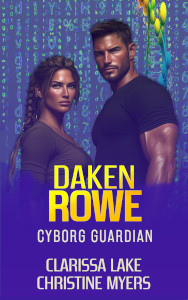
Before Daken Rowe: The Choices That Shaped the Cyborg Guardians

The Cyborg Guardians series doesn’t begin with the men you meet in the books.
It begins with a war—a brutal 90-year conflict that shaped the world they would one day inherit.

Daken Rowe fought that entire war.
Steele Nova and Raven Blackwood did not.
They remained in stasis, engineered but not awakened, until the fighting ended and Vyken Dark returned to Earth.

What follows is the arc these three men create together.

Steele Nova — The First Awakening

Steele is part of the first new wave of cyborgs awakened after the war.
He steps into a world struggling to rebuild and must learn humanity from scratch—not through combat, but through connection.

His story is about:

  • discovering choice after a lifetime of programming
  • becoming more than what he was designed to be
  • learning the cost of protecting with restraint, not force

Steele’s awakening becomes the spark that defines the new Guardians.

Raven Blackwood — The Man Who Tests the Boundaries

Raven awakens alongside Steele, trained under Daken Rowe but shaped by a different temperament. He understands discipline perfectly—until he meets the one person who changes everything.

His story is about:

  • breaking rules for the right reasons
  • the emotional fracture that comes with caring
  • how one choice can ripple through a team

He becomes the Guardian who proves that loyalty is more complex than programming ever accounted for.

Daken Rowe — The Veteran Who Returned Home

Daken is the bridge between the old world and the one being rebuilt.

He:

  • fought the Interstellar War for ninety years
  • survived losses most men couldn’t endure
  • came home with the weight of command still on his shoulders

He was sent to Gretchen in the Rockies to help Shadow Hawk train the newly awakened cyborgs—including Steele and Raven.
He shaped them.
He led them.
And eventually, he learned from them.

Daken’s story is about:

  • leadership
  • responsibility
  • the cost of carrying others
  • and what happens when a man who always walked ahead… allows someone to walk beside him.

Together, They Form the Spine of the Cyborg Guardians

Across these books, the deeper arc explores:

Awakening into humanity (Steele)
Testing the limits of choice (Raven)
Bearing the weight of leadership (Daken)

Each book stands alone.
Together, they create the foundation of the new era of cyborg protectors.

And Daken’s story is where those threads finally converge.

Last Call for ARC Readers — Daken Rowe

As I prepare to finalize Daken Rowe, I’m opening a final call for ARC readers before the book goes live.

ARC readers receive an advance copy of the novel in exchange for an honest review when the book releases. Reviews don’t need to be long or polished—just genuine. They make a real difference, especially for indie authors.

About the Book

Daken Rowe is a post-apocalyptic cyborg romance with dual protagonists, high stakes, and a slow-burn bond forged under pressure.

  • A battle-hardened cyborg Guardian built to protect
  • A human leader holding a fragile enclave together
  • A love that becomes choice, partnership, and home
  • Found family, survival, and rebuilding after the fall

If you enjoy emotionally grounded sci-fi romance with strong characters and a protective hero who learns what it means to stay, this book may be for you.

What I’m Looking For

ARC readers who:

  • Can read the book before release
  • Are willing to leave an honest review (Amazon, Goodreads, or Bookbub)
  • Understand that reviews help visibility—even a few sentences matter

If you’re not sure you’ll have time, that’s okay. I’d rather know now so I can offer the spot to another reader.

A Quick Note on Availability

In the past, I’ve had many ARC sign-ups but only a handful of reviews. To keep things fair and manageable, this ARC round will be smaller and more intentional.

If you sign up, please be reasonably confident you can read and review.
If life gets in the way, just let me know—no guilt, no pressure.

How to Sign Up

👉 ARC Sign-Up Link Here:

I’ll be closing ARC sign-ups soon as the preorder period moves forward.

Thank you for supporting my work—whether you’re reading, reviewing, or cheering from the sidelines. Every bit of it matters more than you know.