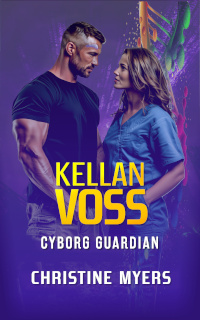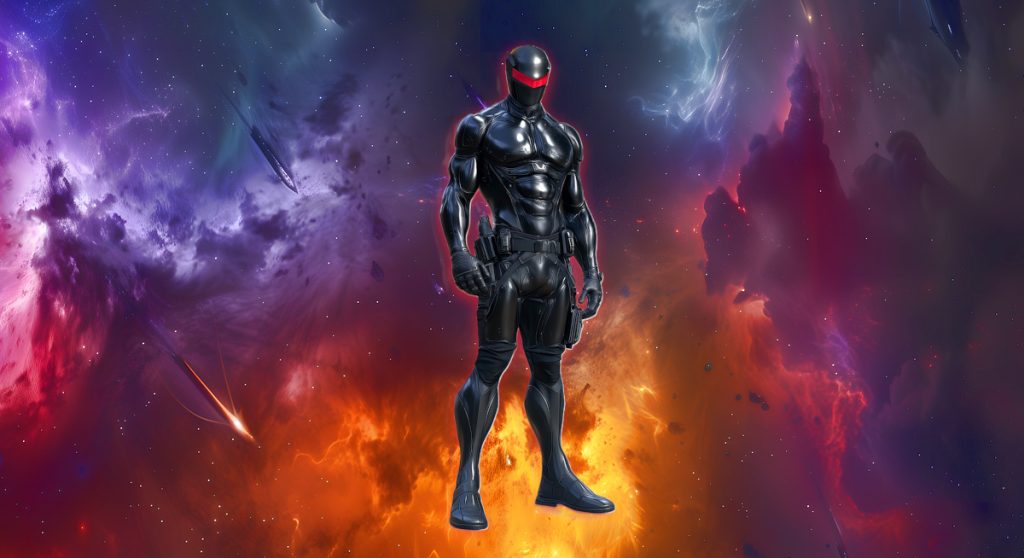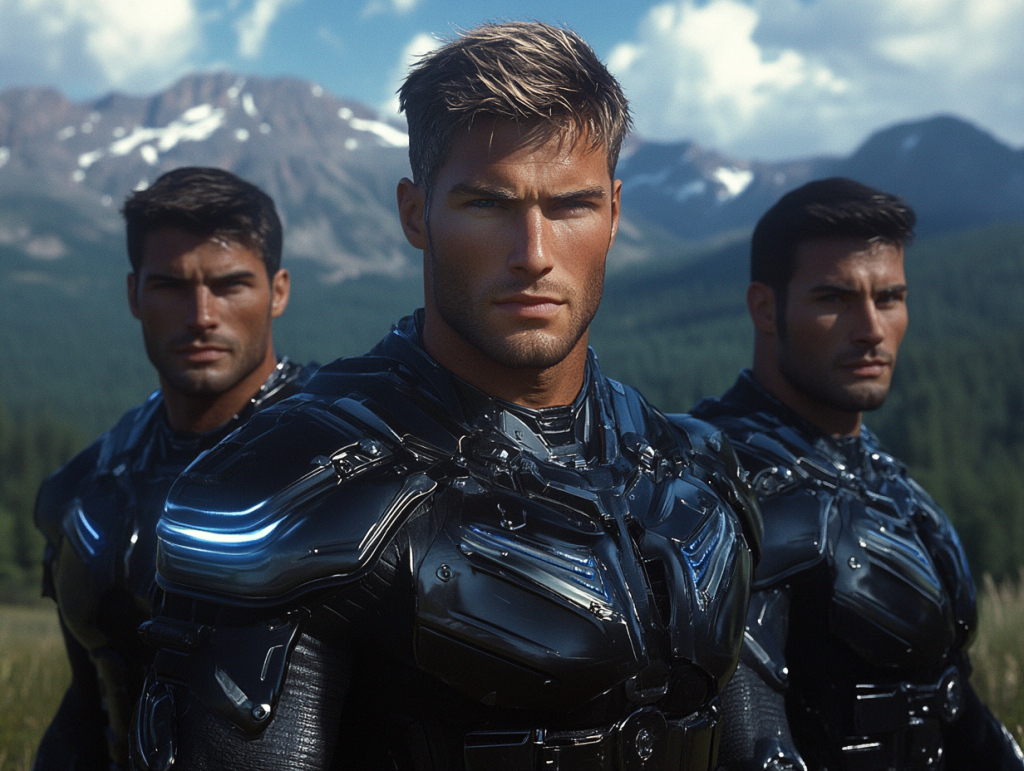
Kellan Voss Cyborg Guardian

Sample Chapters

Cyborg Guardian Book Four

Chapter One

Sunfall Station

Kellan Voss

Los Angeles should have been dead by now, the Mesaarkans having done enough damage to ensure that nothing this complex could still be functioning decades after the initial attack.

From the ridge above the basin, the city stretched out below me in fractured layers of collapsed structures and fused metal. The remnants of towers and transit lines formed a landscape that hadn’t recovered so much as hardened into something that endured. The ocean sat as a dull gray band in the distance beneath. It had finally cleared after a century. Nothing about what remained suggested long-term stability at this scale.

Yet I registered it immediately. It was coming from an old underground transit system hub, one of many places adapted by survivors, and descendants in various cities around what was once the United States of America.

The power moving through the ground beneath my boots was steady, controlled, and far too consistent to belong to scavenged systems or temporary fixes. The signal carried a level of precision that indicated maintenance rather than survival. It didn’t fluctuate or degrade under load, and that alone made it incompatible with anything that should still be operational this long after the war.

That alone was enough to shift it from anomaly to threat, the kind of controlled output that didn’t exist without intent behind it.

“Say that again,” I murmured.

The comm at the base of my skull warmed as the signal stabilized, and Max Steele’s voice came through, steady as always but carrying the kind of focus that meant he had already evaluated multiple failure scenarios.

“Sunfall Station is producing more output than anything west of Denver,” he said. “And it’s been doing it for six months without command authorization.”

Six months was not an anomaly. It was control.

My gaze tracked the broken transit lines feeding into the center of the basin, where the station had been buried beneath what used to be a metro hub, the collapsed structures above it reinforced and repurposed into something that no longer resembled its original design. Improvised antennae extended upward through the wreckage, angled to catch sunlight and direct it downward.

Movement registered along the lower levels—organized, deliberate, following patterns rather than reacting to them.

That told me more than the power output.

“Are you sending a team?” I asked.

“No.”

The weight behind that answer was immediate.

“I’m sending you.”

I adjusted my stance and expanded the scan radius, letting my systems pull in deeper readings from below as Mesaarkan, human, and hybridized signatures overlapped in ways that resisted clean classification. Nothing about the distribution suggested instability, which made it more concerning, not less.

That level of integration required control.

“Guardian jurisdiction?” I asked.

“Officially, recon and assessment,” Max said. “Unofficially, if Command hits this place blind, we risk waking something we can’t shut down.”

That aligned with what I was seeing.

I crouched near the fractured railing at the edge of the ridge and pressed my fingers briefly against the metal, feeling the faint vibration before my systems translated it into frequency, pattern, and harmonic consistency. The structure held a precision that ruled out improvisation. This had been designed.

Someone had built this to function.

“And who’s running it?” I asked.

There was a brief pause—subtle, but deliberate enough to register.

“Tamsin Ward,” Max said. “CRENA-trained systems engineer. Went off-grid five years ago.”

Five years ago, I had returned to Earth after the war because my genetic match had finally been identified. By the time I arrived, Tamsin Ward had already gone off-grid, leaving the Enclave with a name, a genetic confirmation, and no location. I had spent years knowing she existed somewhere on Earth, but not where to find her.

The name didn’t pass through my system as simple data.

It landed deeper than that, triggering an immediate internal response that bypassed standard processing, my systems reacting before I consciously interpreted why. Compatibility metrics initiated automatically, genetic data cross-referenced without prompting, but I didn’t need the results to understand what was happening.

I felt it.

The shift was physical and immediate, my pulse increasing before I regulated it, neural activity spiking outside normal threat or environmental parameters as something in my system aligned to her presence without requiring confirmation.

There was nothing gradual or uncertain about it. The realization settled into place fully formed—she was my genetic match.

It wasn’t a conclusion I reached through analysis or deduction, but something my system accepted as fact the moment her identity registered, the response too precise to misinterpret and too immediate to dismiss.

I went still on the ridge, my attention fixed on the basin below, aware that I couldn’t isolate her exact position through layers of collapsed infrastructure and shielding.

That didn’t matter. The alignment had already occurred.

“You didn’t mention she was here,” I said, keeping my tone controlled.

Max didn’t respond immediately.

“I knew what that would do to your focus,” he said. “You needed to assess the situation before the bond had a chance to complicate it.”

He didn’t want me distracted. It was far more than just a distraction. Disruption was closer to reality.

“And the match?” I asked.

“Confirmed.”

No hesitation.

Of course it was. I could feel it.

“You should have told me.”

“I made a call,” he said. “You’re the best one to handle this. I wasn’t going to compromise that before you even set foot in the station.”

That was a calculated decision, and not an unreasonable one.

“There’s no scenario where this bond doesn’t activate,” I said.

“It already has,” Max replied.

He was correct. The response I was experiencing wasn’t anticipation. It was onset.

“Then it won’t interfere,” I said, intending that to be true.

There was a brief silence before Max spoke again.

“See that it doesn’t,” he said. “Because if that core destabilizes, we’ve got more than one problem.”

“Understood.”

“I’ll be listening.”

The channel closed.

I remained on the ridge a moment longer than necessary, not because I needed additional data or confirmation, but because the signal below was no longer the only variable drawing my attention.

She was.

And I hadn’t seen her yet.

The descent into the basin should have required full focus.

It didn’t.

I paused at the edge of the descent long enough to check my gear one more time, more from discipline than necessity. The nanite armor was already engaged, sealed over my body in a dark second skin calibrated for impact, heat, shrapnel, and energy feedback. I had not brought spare clothing because I didn’t need it in the field. The armor could recede when necessary and reform at a thought, which made conventional combat gear redundant.

That didn’t mean I entered an unknown station unequipped.

My utility belt carried field clamps, med patches, emergency nanite boluses, scanner chips, compact tools, and emergency power cells. A sidearm rested in the holster at my hip, and my rifle was secured across my back by a magnetic sling, close enough to draw if the approach turned hostile but out of the way while I moved through broken terrain.

Nothing about the gear was ornamental. It was what a Guardian carried when walking into a place that should not have been alive.

The deeper I moved through the ruins, the more pronounced the awareness became, the steady hum of power beneath my feet intensifying while something else settled alongside it—something internal, integrating into my system without registering as interference.

It didn’t spike or fluctuate. It aligned with a steadiness that made it far more difficult to dismiss, integrating into my system without resistance as if it had always belonged there.

I had operated for decades without anything compromising my focus, every response controlled, every reaction measured and contained within mission parameters.

This wasn’t compromise. It was integration,

and that made it far more difficult to ignore.

The entrance to Sunfall lacked the defensive structure I expected. There were no visible choke points and no automated weapon systems designed to control approach vectors. Just people.

Armed, alert, and steady in a way that suggested experience rather than reliance on infrastructure.

They stopped me, questioned me, and assessed threat level and intent.

I answered, maintaining the tone that prevented escalation, but even as I did, part of my attention remained directed forward, pulled deeper into the structure of the station toward something I could not yet see but no longer needed to locate through conventional means.

The closer I moved, the clearer it became that this wasn’t just recognition. It was connection.

  The corridor opened into a larger chamber, and the moment I crossed the threshold, my awareness of her sharpened. The bond settled more firmly into place as my system responded to proximity.

Before I saw her, I understood the situation.

The system itself confirmed the precision of the power flow and the efficiency of the routing, indicating control beyond what should have been possible under these conditions.

Then I saw her.

My reaction was immediate and far more intense than I had anticipated, my pulse increasing again before I could regulate it as my attention locked onto her, my system responding to her presence in a way that made it difficult to shift my focus anywhere else. It wasn’t just visual recognition or confirmation of identity—it was a full-system response, my heart rate increasing again as the connection integrated more completely, reinforcing what I had already recognized on the ridge.

She stood at the center of the chamber with one hand braced against a console emitting a steady, controlled glow, her other hand moving through a projected interface with practiced precision. There was no hesitation in her movements, no sign that she was reacting to instability.

She was controlling and maintaining it.

My system tracked every detail automatically, but my attention remained fixed on her, returning to her even when I attempted to broaden my focus to include the rest of the environment.

Someone spoke her name.

“Tamsin Ward.”

When she turned, the reaction hit immediately. My attention locked onto her in a way that made everything else in the chamber lose priority without conscious input. Visual recognition and confirmation of identity became a full-system response, further increasing my heart rate as the bond settled more firmly into place, reinforcing what I had already recognized before I ever saw her.

Her breath caught—subtly, controlled, but present—and the fact that I registered it at all told me everything I needed to know.

She felt it too.

There was no confusion in her expression, no hesitation or attempt to dismiss what had just happened. Her awareness was immediate and matched my own, removing any remaining uncertainty about what this was.

The moment our eyes met, our connection solidified completely. Our bond settled into place with a level of certainty that left no room for reinterpretation. My system registered alignment as it locked.

That was enough.

The realization settled into place fully formed—she was my genetic match.   My certainty of it didn’t come from analysis but from the way my system had already aligned to hers without hesitation. It wasn’t simply a biological phenomenon. It came with an empathic connection that we called the bond. In some cases, it became telepathic.

Standing there in front of her, already aware of the way my system had aligned to hers, I understood that maintaining operational control was no longer just a matter of discipline.

It was a matter of timing. Until now, I knew I had a match out in the universe somewhere. I even knew her name, but I didn’t know where to find her when the time was right. Now here she was, and she was beautiful.

I wanted her the moment I saw her. For a time, that overwhelmed my purpose for coming here. It took more seconds than usual to pull my systems under control. This was going to be even harder than I anticipated.

Chapter Two   

First Contact

Tamsin

The system had been stable for three hours, not perfectly stable. Nothing running on a hybrid Mesaarkan matrix ever was. But it was stable enough that I could step away from the core without expecting it to spike the moment my attention shifted elsewhere. The containment algorithms were holding, harmonic variance inside acceptable thresholds, and the deeper logic net—what little of it I allowed to remain active—had gone quiet.

That was as close to peace as Sunfall ever got.

I rested my hand against the console, feeling the low vibration of the core through the reinforced surface, letting the rhythm settle into something familiar as I tracked the secondary readouts. Power routing, structural load, thermal distribution—everything moving the way I had designed it to move, everything balanced on the edge of failure in a way that required constant control to maintain.

That didn’t bother me. Balance had never come from safety. It came from control.

“Tamsin.”

I didn’t look up right away. Darek, our defense chief, rarely interrupted unless it mattered. The fact that he used my name instead of waiting meant he had already decided this wasn’t something I would want delayed.

“Tell me it’s not the lower grid,” I said, watching the flow stabilize across the secondary conduits.

“It’s not the grid.”

That pulled my attention immediately.

I glanced over, reading the set of his shoulders before I fully turned. Not alarmed. Not urgent.

Measured.

“Then what is it?”

“We’ve got a visitor.”

That alone wasn’t unusual. Traders, scouts, and small groups looking to barter for power access or safe passage came through often enough. Most of them decided quickly they didn’t want to deal with us.

“That doesn’t explain why you’re interrupting me,” I said.

“He gave a name.”

Something in his tone shifted just enough to pull my focus completely away from the system.

“What name?”

“Kellan Voss.”

The reaction hit before I could stop it.

It moved through me fast and deep, sharper than anything I had felt since the first time I interfaced with the Mesaarkan core and realized just how unstable it really was. My breath caught, a brief, involuntary break in control that I hadn’t experienced in years, my body responding before my mind could reassert discipline.

Kellan Voss. The name didn’t land as information. It settled into place as recognition because he was the cyborg genetic mate I hoped would find me one day.

I turned fully now, the system falling into the background in a way it never did unless something else demanded more of my attention. The steady awareness I had learned to ignore over the past weeks suddenly sharpened into something focused and undeniable.

“He’s here?”

“Yes.”

“How far inside?”

“Lower concourse. We’ve got him stopped.”

That was procedure.

It wasn’t enough.

The pull I had been managing—subtle, intermittent, easy to dismiss as system interference or fatigue—wasn’t subtle anymore. It had direction now, a clear line that stretched from where I stood to him somewhere below, tightening with every second I remained still.

“Bring him in,” I said.

Darek hesitated.

“That’s it?” he asked. “No delay? No screening?”

“If he made it past the outer perimeter without incident, he’s already been screened,” I said. “And if he is who he says he is, we don’t leave him standing in a corridor.”

“That’s not what I’m asking.”

I met his gaze.

“I know.”

Darek studied me for a moment, and I knew what he was seeing.  My focus had shifted from the system to something else that had taken priority without my permission.

“You knew this was coming,” he said.

“I knew it was possible.”

His gaze sharpened. “Possible how?”

I held his eyes, because if there was anyone in Sunfall who deserved the truth before rumors filled in the gaps, it was Darek.

“Kellan Voss is my genetic match.”

Darek went still. He was not exactly shocked.

But the weight of it landed the way it should have.

“Confirmed?”

“Enough that I felt it when you said his name.”

His attention flicked once toward the corridor, then back to me. “Does he know?”

“If he’s close enough to feel the bond, he knows.”

Darek absorbed that in silence, his expression tightening with the practical concerns I expected from him. Security. Command. The system. Me.

“That changes things,” he said.

“Yes.”

“Does it compromise you?”

“No,” I said, and meant it. “But pretending it doesn’t matter would.”

That answer seemed to settle him more than denial would have.

He nodded once. “Then I’ll bring him in.”

“Darek.”

He paused.

“This stays with you for now.”

“Understood.”

I had prepared for the possibility when I submitted my DNA. I decided that if I was going to build something that lasted in a place like this, I wouldn’t do it alone.

Preparation wasn’t the same as reality.

It wasn’t the same as feeling the bond—our bond—settle into place with a certainty that didn’t leave room for hesitation the moment his name reached me.

“Bring him in,” I said again, quieter now, but no less certain.

Darek nodded and turned away.

I remained where I was for a moment longer, my hand still resting against the console. Forcing my attention back into the system, I felt the steady pulse of the core under my palm, tracking the familiar rhythm as if it should anchor me the way it always had.

It didn’t.

The system itself hadn’t changed, but my awareness of it had shifted in a way I couldn’t ignore. The focus I normally held on every fluctuation and variance slipped just enough that I had to consciously pull it back into place. It wasn’t gone, not even close, but it no longer held the same central weight in my attention, as if something else had moved into that space without asking permission.

That had never happened before.

I exhaled slowly and pushed away from the console, straightening as I turned toward the chamber entrance, already aware of the pull intensifying as I moved. It wasn’t overwhelming or disorienting, but it was a constant, steady pressure that didn’t fade no matter how I adjusted my focus. This was something I had to account for instead of dismiss.

I had read the reports, studied the data, and understood the biological and neurological responses tied to genetic compatibility and cyborg bonding well enough to predict the general pattern.

None of that translated to this.

This didn’t feel like something activating.

It felt like something settling into place.

Footsteps sounded in the corridor beyond the chamber, measured and controlled, and the moment they registered, the pull sharpened, narrowing into something precise enough that I no longer needed to question what I was feeling or where it was leading.

I felt him before I saw him.

The exact moment he crossed the threshold, the bond tightened with a clarity that shifted everything else in the room out of focus. My attention locked forward without conscious input as if my system had already made the decision for me.

Then he stepped into view.

For a fraction of a second, my breath stalled—not because of what he was, but because of the way my body reacted to his presence. The moment I saw him, my response was immediate and far more intense than anything I had prepared myself for.

Cyborg. Guardian. Built for war, for control, for survival.

I understood all of that.

None of it mattered.

What held my attention was the way he moved, the quiet certainty in it, the way his presence filled the space without force or display, as if he didn’t need to prove anything to anyone around him. And when his focus shifted and locked onto me, the precision of it matched exactly what I felt pulling in the other direction, the connection aligning immediately.

That was what made it real—not the data I had reviewed or the decision I had made when I submitted my DNA. The way the recognition settled into place the moment I saw him was complete and undeniable. My mind and body responded as if it had already accepted him long before this meeting ever happened.

It was like an epiphany. Here he was, and suddenly I knew Kellan Voss was the man meant to share the rest of my life with me. There was nothing gradual we needed to confirm or work through. I had chosen to accept our match before this moment existed. The bond was aligning exactly the way the reports said it would. All that remained was to accept the reality of that choice taking form in front of me.

Someone at the edge of the room said my name, but it barely registered against the shift already happening.

“Tamsin Ward.”

I turned fully, though my attention had never left him, and when our eyes met, the bond tightened further. I felt our connection with a depth that made my pulse jump despite every instinct I had to keep control.

His appearance registered in pieces—height, build, the way his body armor fit him like a second skin—but none of that held my focus for long.

It was him.

The way my body responded to him.

The way the pull didn’t ease once I acknowledged it but settled deeper, more defined.

I stepped toward him without making the decision consciously, closing the distance because it already felt unnecessary.

“Kellan Voss.”

Not a question.

“Yes.”

His voice was steady, grounded in a way that cut through the rest of the noise in my head more effectively than anything else had.

“I’m Tamsin Ward,” I said, my voice more controlled than I felt. “I expected you sooner.”

The corner of his mouth shifted slightly, not quite a smile.

“I came as soon as I was sent.”

I held his gaze for a moment longer, letting the reality of this settle without trying to contain it, then added, more evenly, “I’m glad you’re here.”

It wasn’t everything I could have said.

But it was true.

The bond held steady between us, constant and impossible to ignore, no longer something I could push to the edges of my awareness without effort.

He stepped closer, closing the last of the distance with quiet certainty, and took my hands in his.

The contact was immediate—warm, steady, deliberate.  My pulse caught again before stabilizing as my body adjusted, recalibrating around the connection instead of reacting against it.

He watched me for a moment, confirming something he already understood.

“You felt it,” I said.

“Yes.”

His grip didn’t change.

“So did I.”

There was no point pretending otherwise—no point trying to frame it as anything less than what it was.

This wasn’t something that could be managed by ignoring it.

“We’ll take care of it,” I said, quieter now, but steady. “After we stabilize the system.”

“Yes,” he said. His hands tightened slightly around mine, steady and certain. “But not because I intend to put this aside. I have waited years to find you. Stabilizing the system comes first because it threatens you, this station, and everyone depending on it. Not because the bond matters less.”

That answer settled something in me.

“Good,” I said.

Because that meant we were aligned.

“We should move,” I said, stepping back just enough to reestablish space without breaking the connection. “If you’re here about the signal, you need to see the core.”

He didn’t answer immediately, but I felt the adjustment in him, the way his focus split and then settled, not losing control but redirecting it.

Finally, he nodded. “Lead the way.”

I turned back toward the console, aware of him behind me in a way that had nothing to do with sound or movement. My awareness of our connection was constant and steady as I re-engaged with the system.

The core still pulsed under my hand.

Still stable.

But it wasn’t the only thing I was holding together anymore.

Chapter Three

Chosen

Tamsin

The mess hall was quieter at this hour, not empty—Sunfall never truly was—but settled into a slower rhythm now that the main rush had passed. Conversations carried at a lower volume, scattered across the room instead of concentrated. The lighting had been dimmed just enough to take the edge off the long cycle without compromising visibility.

The alcoves along the far wall, originally designed for small group meetings, offered a degree of privacy that wasn’t complete but was sufficient for what I needed. That was why I brought him here.

We needed space to think without interruption and a modicum of privacy.

Kellan followed without question, though I could feel his awareness extending outward as we moved. tracking exits, movement, and lines of sight in a way that had nothing to do with me and everything to do with how he had been trained. It didn’t interfere with what was happening between us.

Nothing did.

By the time we reached the alcove, the pull had settled into something steady and constant, no longer spiking with changes in distance. It never faded either, but existed as a continuous presence that didn’t need acknowledgment to remain active. It felt less like something new and more like something that had already taken its place, whether we addressed it directly or not.

I gestured toward the small booth with the table in the middle. “Sit.”

He did, taking the padded bench seat across from me, though the space between us felt narrower than it should have given the distance. I was aware of him in a way that had nothing to do with proximity. I saw the controlled set of his shoulders, the quiet tension that hadn’t left him since we met, the way his attention kept returning to me even when he deliberately shifted it elsewhere.

I took the seat opposite him, folding my hands loosely on the table.

For a moment, neither of us spoke. Because we were both choosing where to start, not because there was nothing to say.

“You built this,” he said finally, his gaze moving briefly past me toward the rest of the station before returning.

“The station was already here,” I said. “I built what made it livable.”

His eyes stayed on mine. “Not just the core.”

“No. The core gave us power. The rest of it took people, routines, repairs, and a lot of stubbornness.”

He nodded slightly, as if confirming something he had already worked out.

“It shouldn’t work,” he said.

“Most days, I agree with you.”

His mouth shifted slightly, not quite a smile.

“That isn’t the same as saying it’s safe.”

“No,” I said, glancing past him toward the people moving through the mess hall, carrying trays, talking quietly, living inside the fragile thing we had built. “It isn’t safe. But it works because we all understand what failure would cost.”

His attention moved over the room again, slower this time, and when it came back to me, something in his expression had changed.

“You didn’t just keep the lights on,” he said. “You gave them a reason to stay.”

That landed more deeply than I expected.

“I tried to,” I said.

“You succeeded.”

A server passed by and set two bowls in front of us along with a pair of cups, the motion smooth and unremarkable, part of a routine that didn’t require acknowledgment. I hadn’t ordered. I didn’t need to. The system here was predictable enough that they knew what I would want before I said it.

Kellan glanced at the food, then back at me.

“You trust it,” he said.

“I trust the system that produced it,” I replied, “and the people maintaining it.”

“That’s a calculated risk.”

“Everything here is.”

He accepted that without argument and reached for the bowl, taking a measured bite. I watched him more than I watched the room, noticing the way he evaluated even something as simple as food before fully committing to it, the way nothing about him was careless or unconsidered.

Still, his attention kept returning to me, though not openly in a way that would draw notice but consistently.

It seemed as if something in him had already decided that I mattered more than anything else in the room, and the rest of his awareness was adjusting around that fact.

While it could have made him feel distant, it

made him feel deliberate.

“You came alone,” I said.

“I did.”

“That wasn’t necessary.”

“It was.” His gaze moved once across the mess hall before returning to me. “A larger presence would have changed the way Sunfall received me.”

“That assumes we would have responded defensively.”

“Wouldn’t you?”

I considered that, letting the question settle without rushing to answer. “Probably. But not because of the numbers.”

“Because of the unknown.”

“Yes,” I said. “We’ve survived this long by being careful about anything we can’t identify.”

His gaze held mine a moment longer than necessary, and I felt it shift from tactical and analytical to something more personal.

“You’re not reacting that way now,” he said.
“No.”

“Why?”

Because the bond had already told me what he was. He was not simply a Guardian who had come to investigate the system. He was my match, my genetic mate, the man I had chosen the possibility of long before I knew his name.

“Because I know who you are,” I said. “Not just your name or your assignment. You’re my genetic mate.”

His expression didn’t change much, but I felt the response through the bond—a subtle tightening of focus, not defensive or surprised, but deeply attentive.

“And that is enough for you.”

“It is,” I said.

It wasn’t the whole truth, but it was the center of it. I could feel the attraction between us, powerful and immediate, and I already knew exactly where this was going. That should have unsettled me more than it did. Instead, the thought of him, of us, only made the pull steadier.

Silence settled again, quieter now, less uncertain.

I picked up my cup, more to occupy my hands than out of necessity, and took a slow sip before setting it back down.

“You felt it before you got here,” I said.

“Yes. From the perimeter.”

I nodded, the confirmation aligning with what I had already experienced. “That matches what I’ve been seeing. It started as something I could ignore, or at least explain away. It stopped being that when you crossed into range.”

“Range,” he repeated, studying me more closely.

“Not distance exactly,” I said. “Something more precise than that. It felt as if the system knew when you were close enough to matter.”

His jaw tightened slightly, not in resistance, but in focus. “Targeted.”

“Yes.”

“That suggests the system is interacting with the bond.”

“It suggests the system is aware of it,” I replied.

His expression hardened in a way that had nothing to do with me and everything to do with the core beneath our feet. “That’s worse.”

“It is.”

We both understood what that meant. The core wasn’t just unstable. It was adapting.

I let that truth settle between us before turning toward the other thing in the room, the one that had nothing to do with Mesaarkan code or unstable power flow.

“The system surprised me,” I said quietly. “You didn’t.”

His attention sharpened. “Me?”

I held his gaze. “Us.”

Understanding moved through his expression.

“The match,” he said.

“Yes.”

“You knew there might be one.”

“I hoped there would be one,” I said. “I submitted my DNA before I left the Enclave. Not because anyone had already given me a name, and not because I knew where the match would lead. I did it because if I was going to build something that lasted here, I didn’t want to do it alone.”

His gaze held mine, steady and intent. “You chose the program.”

“I chose the possibility,” I said. “I chose the chance that somewhere, there was someone built to recognize me the same way I would recognize him.”

The bond tightened between us, quiet and certain.

“You didn’t know it was me,” he said.

“No.” I let the truth sit there, simple and clean. “But when your name reached me, something in me knew the waiting was over.”

“And you accepted whoever the system matched you with,” he said.

There was no judgment in his voice, only a careful attention that made the question feel more personal than procedural.

“No,” I said. “I accepted how it works.”

His gaze stayed on mine, steady and intent.

“You trusted the matching process.”

“I understood it first,” I said. “Trust came after. It doesn’t assign randomly. It aligns for compatibility—genetic, neurological, and behavioral. It filters for people who can function together, not just survive.”

His expression shifted slightly at that, not with doubt, but with recognition.

“And now?”

I didn’t look away.

“Now I don’t need to question it.”

The bond settled more firmly between us as I said it, not intensifying in a way that startled me, but deepening as if the acknowledgment had given it room to become something steadier. Kellan felt it too. I saw that in the way his attention sharpened, in the way his control adjusted around the moment instead of pulling back from it.

“You’re not holding distance,” he said.

“No.”

“I don’t want you to.”

That was not what I expected him to say, and for a moment it left me quiet.

His gaze held mine, direct and certain.

“I was built for this,” he said. “For you, if the match proved true. I’ve spent my entire life knowing there would be a woman somewhere whom my systems would recognize, someone I was meant to protect, care for, and build a future with.”

The words settled into me slowly, not because they surprised me, but because of how completely he meant them.

“The closer I am to you,” he continued, his voice lower now, “the harder it is to care about anything else in this room. I can only fully accept that because that’s how I was made.”

My breath shifted before I could steady it.

“It’s not one-sided,” I said.

“I know.”

His jaw tightened slightly, but there was no resistance in him now. Only control, and the effort it took to keep that control where it belonged.

“I’m not questioning the match,” he said. “I’m trying to finish what I came here to do before I stop pretending I can divide my attention at all.”

That made sense.

More than anything else he had said so far.

“I don’t want us pretending distance will make this less real,” I said. “It won’t.”

“No,” he agreed. “It won’t.”

The words settled between us as a temporary boundary, not around whether we wanted this, but around how long we could wait before acting on what was already true.

He leaned forward slightly, closing some of the distance between us, not enough to draw attention from the rest of the mess hall but enough that the awareness sharpened again, the bond carrying more than presence now.

“You chose this,” he said.

“Yes.”

“You chose a cyborg mate knowing what that meant.”

“I did.”

His gaze moved over my face with a concentration that felt less like analysis and more like wonder held under discipline.

“Then I need you to understand something,” he said.

I waited.

“This is not an interruption to me,” he said. “It is not an inconvenience. I don’t intend to set it aside until it becomes easier to manage.”

My throat tightened slightly.

“What is it, then?” I asked.

His hand shifted on the table, closer now, the movement deliberate.

“The beginning,” he said. “Of what I was made to find. Of what I have wanted since before I had a name for it.”

That reached deeper than logic or compatibility,

deeper than anything the system could have predicted.

I met him there because I had no reason not to.

“That’s what it is for me too,” I said. “A bond. A match. This is not an interruption or something we set aside until it becomes convenient. This is the beginning of what I chose.”

His fingers closed over mine then, warm and certain, and the contact settled through me with a rightness that made everything else in the room feel less urgent for one suspended breath.

“You’re not afraid of that,” he said.

“No, I’m not,” I said. “I did the research. I understood the psychological ramifications of being matched to a cyborg.”

“Good,” he replied, and there was something in that single word that felt almost possessive. Not controlling or demanding. Just deeply, unmistakably pleased. “Because I have waited too long for you to want you less than completely.”

The noise of the mess hall faded again, not gone, just distant enough that it stopped mattering, and the bond settled more deeply between us, no longer just recognition but something acknowledged.

His hand shifted on the table, moving closer without committing to the contact, the movement controlled but no longer restrained the way it had been before.

I didn’t move mine. I just waited. The decision was already there and mutually accepted.

When his fingers finally closed over mine, the contact felt less like a new action and more like something that had already been accounted for. The reaction was immediate but steady, my pulse picking up as my system adjusted around the connection instead of resisting it.

“This is affecting you,” he said quietly.

“Yes.”

“It’s affecting you too.”

“Yes.”

He didn’t pull away.

Neither did I.

“We still have a system to stabilize,” he said.

“We do.”

The words didn’t break the moment.

They grounded it.

He shifted closer, the movement deliberate now, and I felt the change immediately, the awareness tightening in a way that made it harder to separate my response from the bond itself.

“If I don’t keep my focus on that,” he said, his voice lower now, “it’s going to shift somewhere else.”

“I know.”

“And if it does—”

“Then we deal with it after we finish what we started,” I said.

That stopped him because he didn’t disagree.

I looked at the table between us and realized I was tired of pretending it was enough distance to matter.

Before the moment could stall, I rose and moved around the narrow table, sliding onto the bench beside him instead of across from him. Kellan turned toward me immediately, his attention locking onto mine with a focus I felt all the way through the bond.

For one breath, neither of us moved.

Then his hand came to the back of my neck, firm and certain, and I leaned in as he met me halfway.

The kiss settled into place the same way everything else had—steady, deliberate, without hesitation once it started. There was nothing rushed about it, nothing uncertain, only a quiet inevitability as the connection deepened and the bond tightened in response, stabilizing instead of disrupting.

My hand came up to his chest without thinking, grounding there as I steadied myself against the reaction, aware of the strength beneath my palm and the steady rhythm that didn’t falter.

He didn’t push further or take more than I allowed. But he didn’t hold back either. Even when he pulled back, he remained close, his hand still warm at the back of my neck.

“That complicates things,” he said.

“It clarifies them,” I replied.

His gaze held mine for a moment longer, and I felt the recalibration in him—adjustment.

Good.

“We still have work to do,” he said.

“Yes.”

This time, when I leaned back, the distance felt intentional rather than necessary, the bond holding steady.

“We finish assessing your power system,” I said, “and then we decide what to do with this.”

“I already know what I want,” he said.

I believed him.

That wasn’t the question.

“Then we make sure we’re still standing when we get there,” I replied.

He nodded once.

“Agreed.”

For a moment, neither of us moved.

I was still close enough to feel the warmth of him through the bond, still close enough to remember exactly how his hand had felt at the back of my neck and how quickly the kiss had stopped being theoretical. The booth had been built for four people, but with him beside me, it felt smaller than that, the curved wall holding us in a pocket of quiet while the rest of the mess hall continued around us.

I could have stayed there.

That was the problem.

The system was stable for now, but stable was not the same as safe, and if we allowed the bond to become the only thing either of us cared about too soon, we would be giving the core another variable we didn’t understand.

So, I made myself move first.

Not away from him. Not really.

I slid out from beside him and returned to the opposite bench, putting the table between us again because we still needed somewhere to set the work, the food, and the pieces of ourselves that had to remain focused until the station was no longer at risk.

Kellan watched me move, his attention following me with a steadiness that made the distance feel more symbolic than real.

The bond did not loosen.

If anything, the fact that I had chosen to create space made it more defined.

“We finish the assessment,” I said, resting my hands on the edge of the table.

He inclined his head once. “Then we decide what comes next.”

I believed he already knew.

So, did I.

But for the moment, we stayed where we were, seated across from each other in the alcove while the station hummed beneath our feet and the connection between us held steady, waiting.

End of sample.

Kellan Voss Cyborg Ranger releases into Kindle Unlimited June 19th. It is currently available in paperback.

Building My Cyborg Romance Universe: Warriors to Protectors

Most military science fiction focuses on the war itself: the battles, the weapons, the enemy, and the terrible choices made when survival is on the line. When I began writing my cyborg romance universe, I was more interested in what happened afterward.

What happens to the beings created to wage war when the fighting ends? Civilization is broken, and they still have long lives ahead of them.  Although they were altered and engineered for combat, they were human beings. With their fighting days over, what kind of life could they build when everything they were designed for no longer exists?

The answer to those questions became the heart of my cyborg stories.

Created for War, But Not Empty Inside

Before I started writing cyborg romance, I read numerous cyborg books. One of the things that fascinated me was the idea of beings created almost entirely for battle. These were men engineered to make war, defeat enemies, survive brutal conditions, and continue fighting when ordinary human soldiers could not.

In many cyborg stories, their lives begin with violence. Enhanced bodies are conditioned for combat, reflexes are sharpened, and instincts are trained toward survival and victory. Some are even manipulated chemically or neurologically to make them more efficient soldiers.

The most interesting part was never the machinery. It was the emotion underneath it.

Even with emotional dampeners, programming, conditioning, or military discipline, my cyborgs are not empty weapons. They feel but may not always understand what they feel. Cyborgs may not have the language for tenderness, longing, fear, loneliness, or love. But the feelings are there.

That is where the romance begins.

A cyborg hero is compelling because he has been told what he is useful for. He has been created for one purpose. Then the war ends, and he has to discover that usefulness is not the same thing as life.

He has to learn who he is when no one is ordering him to fight.

Why My Cyborgs Needed More Than Survival

After a hundred years of war, destruction, killing, sacrifice, and loss, my cyborgs deserved more than survival.

That belief became one of the foundations of the entire universe.

They were created to defend humanity during a war against the Mesaarkans—engineered, trained, and prepared to fight for as long as Earth needed them. Because no one knew how long the war would last, more cyborgs were created than were immediately awakened. Many remained in stasis, waiting to be called into service.

Then the war ended.

Civilization shattered and entire regions struggling to survive. Cities, the main targets of the first Mesaarkans attacks, remained in ruins. Rural communities had to protect themselves. Infrastructure had collapsed, and people were scattered, frightened, hungry, and vulnerable.

Meanwhile, hidden away in stasis vaults were cyborgs who had never been awakened. They had been made for a war that was over.

That idea moved me deeply. These men had never had childhoods or chosen their futures. Many had never even opened their eyes until after the world they were meant to defend had already been broken.

In Cyborg Awakenings, General Gregor: A man of vision convinced Vyken Dark to rescue these cyborgs, to awaken them, and to use them as a resource to rebuild the broken world. You deserved a chance to live, to find love, start families, and find purpose in life. They deserved a chance to become more than weapons.

That is why my cyborg stories are romance-forward. The action, the danger, and the ruined world matter . However, the emotional center is always the relationship: the cyborg and his mate, the bond between them, and the life they begin to build together.

The Genetic Mate Promise

One of the cyborg romance ideas I loved as a reader was the fated mate concept. In Cynthia Sax’s cyborg books, each cyborg had one being created specifically for him. I loved the emotional certainty of that idea: one person, uniquely suited, impossible to replace.

I took inspiration from the broader fated-mates tradition, but the logic of my universe developed in its own direction. In my cyborg world, these men were not only created to fight. They were also promised that when the war ended, they would have genetic mates—women who would complement them physically, emotionally, and biologically. They were assured the chance to fall in love, have families, and live as men instead of weapons.

That promise mattered. I had seen the trope used in another story I read but not applied in the same manner that I applied it to my books. Think about it. What would it take to inspire engineered soldiers to fight a one-hundred-year war?

They would, of course, be programmed for duty and loyalty, but hope is powerful too. They were encoded with hope for a future with the one woman who would look at him and see more than machinery and combat training. She would be the one woman who could make a home with him and start a family.

In fact, I use that as a hook line in my book promotions: made for war, they fought for love.

But like so much in a war-torn world, the promise was imperfectly fulfilled. The scientists never completed a clean, reliable system for matching every cyborg with his mate. There was no perfect database waiting to pair them all neatly when the fighting ended.

Often, finding their genetic mates came down to chance, proximity, instinct, and the strange mercy of fate.

That uncertainty gave the stories room to breathe. It allowed each romance to unfold differently. Occasionally the bond is immediate and undeniable, or the characters must learn what the connection means. The cyborg frequently understands the bond before his mate does. Every woman immediately accepts the connection with open arms, even as she feels the pull herself.

The mate bond gives them the spark.

The story gives them the relationship.

Rebuilding After Everything Falls Apart

Many of my fictional worlds return to the same emotional truth: life can fall apart, and somehow people still have to go on.

That comes from my history. My life got off to a rough start. My family split up when I was very young, and that was not the last challenge I faced. Somewhere along the way, I learned that when life breaks apart, you pick up the pieces and build something new from what remains.

That idea found its way into my fiction again and again.

I first created a post-apocalyptic Earth in the Aledan Series for Hankura to rescue his mate from. Chelle Marlowe—also known as Michelle Marlowe—comes from that damaged Earth, though some of her deeper family history does not appear directly in the Aledan books. In my broader universe, Chelle is a direct descendant of Jolt Somber and Iris from the Cyborg Awakening series.

That kind of connection matters to me. It reminds me that these stories are not isolated from one another. Generations pass. Survivors have children. Love stories echo forward. The people who rebuild one world become the ancestors of those who face the next challenge.

The cyborg universe grew out of that same emotional soil.

Earth is broken, but not dead.
Communities are damaged, but not hopeless.
People are afraid, but they are still planting gardens, repairing homes, raising children, and forming bonds.

And the cyborgs become part of that rebuilding.

From Soldiers to Protectors

The Protectors came into the universe because post-war Earth needed more than warriors.

After the collapse of civilization, scavenger gangs and marauders began preying on vulnerable settlements. Some communities were making real progress—restoring water systems, repairing buildings, growing food, and forming local leadership—but they still had to worry about gangs sweeping in to take whatever they wanted.

That danger became clear in the Cyborg Awakening timeline, especially as Jolt Somber went out into surviving communities to discover how people were really living. What he found was not just poverty or hardship. He found people trying to rebuild while constantly looking over their shoulders.

They required protection, yes.

But they also needed help.

That is where the Protectors became different from ordinary soldiers. They were trained to defend communities and enforce order, but they were also taught practical skills that mattered in a broken world. They could help repair houses, restore water systems, assess security risks, organize defenses, and support local rebuilding efforts.

Not only that, but they were part law enforcement, part military defense, part mentor, part engineer, and part community anchor.

And honestly? I made a lot of it up as I went along.

That is part of the joy of writing a long-running universe. It is a world that reveals itself one book at a time. A question comes up in one story, and the answer becomes lore in the next. A problem appears in one settlement, and suddenly there is a whole structure of Protectors, Rangers, and Guardians growing naturally from the needs of the world.

The Three Cyborg Series as Rebuilding Phases

Over time, the cyborg universe expanded into different phases of Earth’s recovery.

The Cyborg Awakening stories focus on the early years of rebuilding and the first major awakenings. These cyborgs are stepping into a damaged world and trying to understand what their place in it will be.

The Cyborg Rangers move farther into the frontier. Their world is rougher, more dangerous, and often more volatile. Order is fragile, and the Rangers help push back against lawlessness in territories where survival can depend on strength, loyalty, and quick decisions.

The Cyborg Guardians represent another stage of recovery. These stories are still dangerous, but the focus shifts more toward communities trying to stabilize. The Guardians are not only fighting threats. They are helping people build lives that might last.

That progression was not something I fully mapped out from the beginning. It grew from the emotional logic of the universe.

First, people survive and defend what they have. Then they rebuild and begin to imagine a future. The cyborgs move through that same progression.

Why the Romance Still Comes First

Even with all this lore, the books remain romances at heart.

My cyborgs are devoted to their mates. They are loyal to their friends. They become part of communities, not because they were programmed to do so, but because love teaches them what belonging means.

The genetic mate bond may bring two people together, but it does not replace the emotional journey. Attraction is not the same as trust. Biological compatibility is not the same as building a life. The romance comes from watching two people learn each other, choose each other, and face danger together until the bond becomes more than instinct.

That is why I keep returning to these stories.

A cyborg can be stronger than an ordinary man. He can have enhanced reflexes, reinforced bones, superior endurance, and tactical programming. But none of that gives him a home. None of that teaches him how to be loved or shows him what to do when a woman becomes more important than orders, mission parameters, or survival odds.

Love does that.

World Building Spotlight: The Rise of the Protectors

In the aftermath of the Mesaarkan war, Earth did not have the resources to restore civilization all at once. Large cities became rebuilding hubs, but rural communities were often isolated and vulnerable. Roads were damaged. Communication systems were unreliable. Local governments had collapsed or become too weak to protect their people.

The Protector program developed as a response to those conditions.

Protectors were cyborgs assigned to help stabilize struggling communities. Their duties could include:

  • defending settlements from scavenger gangs and raiders
  • helping repair water and power systems
  • training local defense groups
  • restoring order without becoming tyrants
  • assisting with construction and infrastructure
  • protecting trade routes and supply movement
  • identifying genetic mates when proximity triggered the bond
  • Collecting DNA from women who wanted cyborg mates to help their fellow cyborgs

This made them different from soldiers fighting a war. Protectors were not sent to conquer. They were sent to help rebuild.

For many of them, that work became the first real life they had ever known.

Closing Thoughts

Building my cyborg romance universe has never been only about enhanced warriors or futuristic technology. It has always been about what comes after devastation.

What happens after the war, abandonment, after civilization breaks? How can love change a man who is created for violence?

My answer, again and again, is this: people rebuild, communities rise, and love survives. Even a cyborg made for war can become someone’s protector, partner, and home.

Want a free cyborg romance?

Join my reader list and get a free sci-fi romance while you explore the Cyborg Universe.

A New Cyborg Guardian Serial Begins:

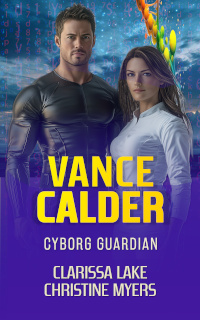
Vance Calder

Cyborg Guardian Serial

Something new has arrived in the Cyborg Guardian universe.

I’ve started releasing a serialized story featuring a new Guardian hero—Vance Calder—and the scientist whose work may determine the fate of Nova Hollow.

Vance is sent to a remote laboratory fifty clicks from the settlement to assess a potential threat. Command believes the facility may be too dangerous to exist.

Instead, he discovers Thea Kovar, a scientist who has spent eight years alone maintaining a system that could either save lives… or destroy them.

And according to Guardian protocols, she is also his genetic mate.

Now Vance faces an impossible mission: protect the woman and the system keeping Nova Hollow safe—or follow orders that could eliminate both.


Start Reading the Cyborg Guardian Serial

The first three episodes of Vance Calder are now available to read.

You can jump into the story here: Vance Calder


How the Serial Works

New episodes will continue to appear as the story unfolds.

Newsletter subscribers will receive updates whenever new chapters are released, so if you’d like to follow the story from the beginning, this is a great time to jump in.


If you enjoy Cyborg Guardians, high-stakes missions, and fated mates, I hope you’ll come along for the ride.

Welcome to Vance Calder’s story.

Behind My Cyborg Romance: A Personal History Written in Alloy and Memory

Cyborg romance didn’t begin for me as a grand plan. It began the way many creative obsessions do—quietly, unexpectedly, with a spark that formed long before I realized it would become an entire universe. Long before I ever wrote a cyborg hero, I was already captivated by science fiction and the emotional possibilities within it.

My love of science fiction didn’t begin with books—it began on the floor of our living room, watching Superman on a black-and-white television.
Strange visitor from another planet with powers beyond those of mortal men.

Those words lit a spark in me before I even understood what story or genre meant. A few years later, when I was about eight, I watched the 1951 film The Day the Earth Stood Still. I was mesmerized. Even then, I wanted Klaatu—the alien—to fall in love with the boy’s mother. Of course, that didn’t happen, but the idea stayed with me.

Looking back, I think Superman and Klaatu were the first seeds of the sci-fi romance author I would eventually become.

Years later, I watched the 2008 version with Keanu Reeves. Critics weren’t kind, but I loved it. The impact of that original story never left me. It shaped the way I see aliens, humanity, connection, and the tension between fear and wonder.

Where Cyborgs First Entered My Imagination

My fascination with cyborgs started even earlier than I realized.
It was the era of The Six Million Dollar Man.

Steve Austin—test pilot, survivor of a catastrophic accident, rebuilt with biomechanical limbs and enhanced senses—was my first exposure to what we would now call cybernetics. The show called them “bionics,” but they were close enough to the cybernetic enhancements I’d later give my own cyborg heroes. It was impossible not to imagine: what would it be like to be rebuilt stronger, faster, tougher… and still so deeply human?

Even today, I can see the roots of my cyborg romances in that series.

Growing Up in the Shadow of Loss

My childhood was a mix of good memories and painful ones.
My parents split when I was around four. Not long after, my mother met someone and decided to move to California with him. The problem was, I couldn’t go—I needed surgery that was the difference between life and death.

My grandparents stepped in. They told her she could leave, but she wasn’t taking us with her.

I didn’t understand the details until much later, but the result was the same:
my mother left for California without me or my brothers.

She visited me once in the hospital, and then she was gone again.
While my grandparents gave us a loving, stable home, I lived with the quiet ache of abandonment. That wound never fully healed. It shaped me, and it shaped the characters I would one day write.

Looking back, I can see how those feelings of loss and displacement seeped into The Aledan Series, where Chelle grieves her mother’s death and Hankura is sent away to another world for his own safety. Fiction often reveals the truths we carry.

Early Adulthood: Love, Hope, and Hard Turns

I married at nineteen and had one child, full of hope for the future. But life had other plans.

My husband developed severe back problems that required major surgery and ended his career. I went to work. Then I lost my job. We moved to the city. Then to the country. Living in the mountains near West Virginia was one of my favorite chapters—growing vegetables, making homemade bread, raising our daughter with a simpler way of life.

But my husband lost his job again.
We moved again.
And that was the beginning of the end of our marriage.

A few years later, I became a single mother trying to build a life for the two of us. During that time, I was shopping The Aledan Psion to publishers and thought I’d finally found one—an independent publisher who loved the story. But his business never got off the ground, and the deal vanished.

Reality hit hard.
I became a small-town newspaper reporter for about nine months, but the pay didn’t cover basic bills. My estranged husband could barely support himself, let alone help us. I crashed into a deep depression and couldn’t work for a while.

Rebuilding: One Step at a Time

Therapy helped pull me back.
Three years of unpacking old wounds, learning resilience, and trying to breathe again.

When I was finally able, I went back to school—determined to become employable and give my daughter a stable home. I took writing courses and computer classes. I hated the math in programming, so I dropped that track, but I learned computers well enough to stand out.

I worked in a factory for two years while finishing school.
I taught myself transcription.
I learned secretarial skills.

Eventually, I walked into a temp agency and walked out with jobs in clerical work and computer operations. That led to a position in a doctor’s office where I stayed for ten years—despite the fifty-mile commute through brutal Western New York winters.

Later, I found a job closer to home and spent another fifteen years in a hospital administrative department. Through it all, writing stayed on the back burner.

But not forever.

The Return to Writing — and the Shift Toward Cyborgs

Somewhere in those years—maybe during a quiet evening, maybe during a long winter—I started writing again. Retirement was coming eventually, and I knew I wanted to become an indie author. That dream had never died; it had only waited.

By then, I had completed two space opera romance series and fully established my Aledan Universe.

But when I discovered Cynthia Sax’s early cyborg romances, something clicked. The stories reminded me of everything I had loved as a child:

  • Superman’s alien loneliness
  • Klaatu’s quiet otherness
  • Steve Austin’s cybernetic rebirth

It all converged.

I borrowed some elements common to the genre—like genetic mates—but beyond that, everything diverged into the universe that already lived inside me. My cyborgs were born from the ashes of the Aledan war, from humanity’s desperation, from the science and trauma and resilience woven through my worlds.

And maybe, if I’m honest, from my own longing.

**Fated mates. Genetic bonds.

A love that cannot abandon you.
A partner who will never leave you behind.**

After failed romances and the lingering shadow of early abandonment, it’s no surprise my heart turned toward stories of men who love fiercely, permanently, and without hesitation. That theme isn’t accidental—it’s emotional truth, transformed into fiction.

Where Cyborg Lore Came Together

The final spark came when I read a story where cyborg warriors were promised mates once they returned home from war. Something about that concept struck home—deeply and personally. It connected with the unresolved pieces of my own past and the emotional scars that shaped me.

From that moment, everything in my universe aligned:

  • My world had cyborg soldiers engineered for a war against the Mesaarkans.
  • That war created a surplus of never-awakened cyborgs in stasis.
  • These men survived a conflict they never truly lived through.
  • And they were waiting—quietly, unknowingly—for a chance at life, identity, and love.

It all fit.
It all made sense.
And that’s how my cyborg romances truly began.


Before Daken Rowe: The Choices That Shaped the Cyborg Guardians

The Cyborg Guardians series doesn’t begin with the men you meet in the books.
It begins with a war—a brutal 90-year conflict that shaped the world they would one day inherit.

Daken Rowe fought that entire war.
Steele Nova and Raven Blackwood did not.
They remained in stasis, engineered but not awakened, until the fighting ended and Vyken Dark returned to Earth.

What follows is the arc these three men create together.

Steele Nova — The First Awakening

Steele is part of the first new wave of cyborgs awakened after the war.
He steps into a world struggling to rebuild and must learn humanity from scratch—not through combat, but through connection.

His story is about:

  • discovering choice after a lifetime of programming
  • becoming more than what he was designed to be
  • learning the cost of protecting with restraint, not force

Steele’s awakening becomes the spark that defines the new Guardians.

Raven Blackwood — The Man Who Tests the Boundaries

Raven awakens alongside Steele, trained under Daken Rowe but shaped by a different temperament. He understands discipline perfectly—until he meets the one person who changes everything.

His story is about:

  • breaking rules for the right reasons
  • the emotional fracture that comes with caring
  • how one choice can ripple through a team

He becomes the Guardian who proves that loyalty is more complex than programming ever accounted for.

Daken Rowe — The Veteran Who Returned Home

Daken is the bridge between the old world and the one being rebuilt.

He:

  • fought the Interstellar War for ninety years
  • survived losses most men couldn’t endure
  • came home with the weight of command still on his shoulders

He was sent to Gretchen in the Rockies to help Shadow Hawk train the newly awakened cyborgs—including Steele and Raven.
He shaped them.
He led them.
And eventually, he learned from them.

Daken’s story is about:

  • leadership
  • responsibility
  • the cost of carrying others
  • and what happens when a man who always walked ahead… allows someone to walk beside him.

Together, They Form the Spine of the Cyborg Guardians

Across these books, the deeper arc explores:

Awakening into humanity (Steele)
Testing the limits of choice (Raven)
Bearing the weight of leadership (Daken)

Each book stands alone.
Together, they create the foundation of the new era of cyborg protectors.

And Daken’s story is where those threads finally converge.

Last Call for ARC Readers — Daken Rowe

As I prepare to finalize Daken Rowe, I’m opening a final call for ARC readers before the book goes live.

ARC readers receive an advance copy of the novel in exchange for an honest review when the book releases. Reviews don’t need to be long or polished—just genuine. They make a real difference, especially for indie authors.

About the Book

Daken Rowe is a post-apocalyptic cyborg romance with dual protagonists, high stakes, and a slow-burn bond forged under pressure.

  • A battle-hardened cyborg Guardian built to protect
  • A human leader holding a fragile enclave together
  • A love that becomes choice, partnership, and home
  • Found family, survival, and rebuilding after the fall

If you enjoy emotionally grounded sci-fi romance with strong characters and a protective hero who learns what it means to stay, this book may be for you.

What I’m Looking For

ARC readers who:

  • Can read the book before release
  • Are willing to leave an honest review (Amazon, Goodreads, or Bookbub)
  • Understand that reviews help visibility—even a few sentences matter

If you’re not sure you’ll have time, that’s okay. I’d rather know now so I can offer the spot to another reader.

A Quick Note on Availability

In the past, I’ve had many ARC sign-ups but only a handful of reviews. To keep things fair and manageable, this ARC round will be smaller and more intentional.

If you sign up, please be reasonably confident you can read and review.
If life gets in the way, just let me know—no guilt, no pressure.

How to Sign Up

👉 ARC Sign-Up Link Here:

I’ll be closing ARC sign-ups soon as the preorder period moves forward.

Thank you for supporting my work—whether you’re reading, reviewing, or cheering from the sidelines. Every bit of it matters more than you know.

DAKEN ROWE: CYBORG GUARDIAN — Official Book Trailer

Book 3 of the Cyborg Guardian Series

I’m excited to finally share the official trailer for my upcoming sci-fi romance,
Daken Rowe: Cyborg Guardian.

This story has been living in my head—and my heart—for a long time.

Daken Rowe is a Guardian cyborg, built for war and programmed to protect.
Selene Kane is the leader of a hidden enclave in the Black Hills, holding her people together through grit, strategy, and sheer will.

When Daken is sent to defend Selene’s enclave, what begins as duty turns into something far more dangerous: belonging.

This is a story about:

  • a battle-forged cyborg who learns how to stay
  • a woman who leads without surrendering herself
  • found family in the ruins of the old world
  • and a bond that becomes the foundation for rebuilding something stronger than war

The trailer gives a first look at the book’s tone—quiet intensity, fierce loyalty, and a romance forged under pressure rather than convenience.

Read the first two Chapters HERE

Daken Rowe: Cyborg Guardian is now available for preorder.
Thank you for reading, watching, and supporting these stories. More teasers and excerpts are coming soon.

Preorder HERE