Most military science fiction focuses on the war itself: the battles, the weapons, the enemy, and the terrible choices made when survival is on the line. When I began writing my cyborg romance universe, I was more interested in what happened afterward.
What happens to the beings created to wage war when the fighting ends? Civilization is broken, and they still have long lives ahead of them. Although they were altered and engineered for combat, they were human beings. With their fighting days over, what kind of life could they build when everything they were designed for no longer exists?
The answer to those questions became the heart of my cyborg stories.
Created for War, But Not Empty Inside
Before I started writing cyborg romance, I read numerous cyborg books. One of the things that fascinated me was the idea of beings created almost entirely for battle. These were men engineered to make war, defeat enemies, survive brutal conditions, and continue fighting when ordinary human soldiers could not.
In many cyborg stories, their lives begin with violence. Enhanced bodies are conditioned for combat, reflexes are sharpened, and instincts are trained toward survival and victory. Some are even manipulated chemically or neurologically to make them more efficient soldiers.
The most interesting part was never the machinery. It was the emotion underneath it.
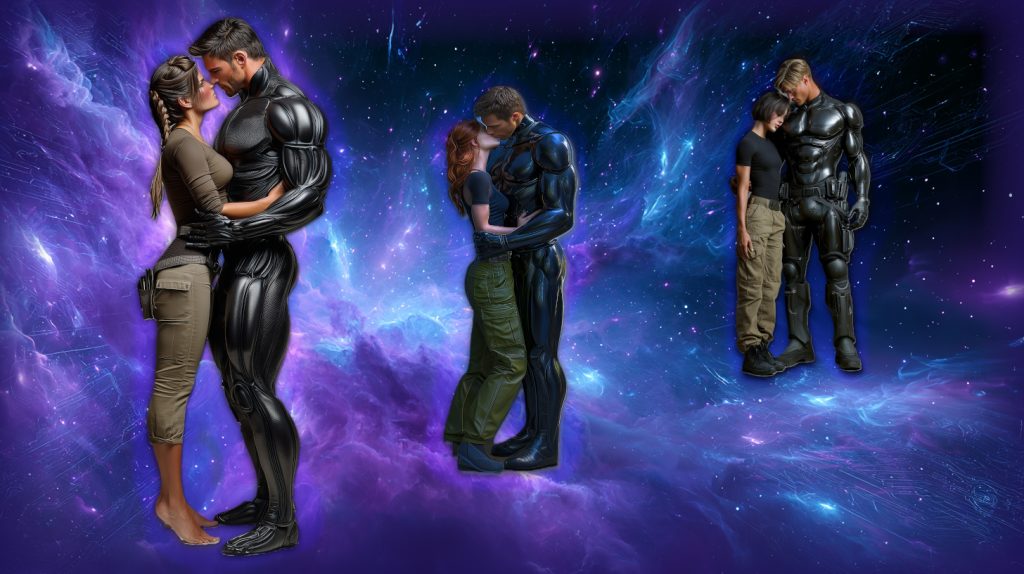
Even with emotional dampeners, programming, conditioning, or military discipline, my cyborgs are not empty weapons. They feel but may not always understand what they feel. Cyborgs may not have the language for tenderness, longing, fear, loneliness, or love. But the feelings are there.
That is where the romance begins.
A cyborg hero is compelling because he has been told what he is useful for. He has been created for one purpose. Then the war ends, and he has to discover that usefulness is not the same thing as life.
He has to learn who he is when no one is ordering him to fight.
Why My Cyborgs Needed More Than Survival
After a hundred years of war, destruction, killing, sacrifice, and loss, my cyborgs deserved more than survival.
That belief became one of the foundations of the entire universe.
They were created to defend humanity during a war against the Mesaarkans—engineered, trained, and prepared to fight for as long as Earth needed them. Because no one knew how long the war would last, more cyborgs were created than were immediately awakened. Many remained in stasis, waiting to be called into service.
Then the war ended.
Civilization shattered and entire regions struggling to survive. Cities, the main targets of the first Mesaarkans attacks, remained in ruins. Rural communities had to protect themselves. Infrastructure had collapsed, and people were scattered, frightened, hungry, and vulnerable.
Meanwhile, hidden away in stasis vaults were cyborgs who had never been awakened. They had been made for a war that was over.
That idea moved me deeply. These men had never had childhoods or chosen their futures. Many had never even opened their eyes until after the world they were meant to defend had already been broken.
In Cyborg Awakenings, General Gregor: A man of vision convinced Vyken Dark to rescue these cyborgs, to awaken them, and to use them as a resource to rebuild the broken world. You deserved a chance to live, to find love, start families, and find purpose in life. They deserved a chance to become more than weapons.
That is why my cyborg stories are romance-forward. The action, the danger, and the ruined world matter . However, the emotional center is always the relationship: the cyborg and his mate, the bond between them, and the life they begin to build together.
The Genetic Mate Promise
One of the cyborg romance ideas I loved as a reader was the fated mate concept. In Cynthia Sax’s cyborg books, each cyborg had one being created specifically for him. I loved the emotional certainty of that idea: one person, uniquely suited, impossible to replace.
I took inspiration from the broader fated-mates tradition, but the logic of my universe developed in its own direction. In my cyborg world, these men were not only created to fight. They were also promised that when the war ended, they would have genetic mates—women who would complement them physically, emotionally, and biologically. They were assured the chance to fall in love, have families, and live as men instead of weapons.
That promise mattered. I had seen the trope used in another story I read but not applied in the same manner that I applied it to my books. Think about it. What would it take to inspire engineered soldiers to fight a one-hundred-year war?
They would, of course, be programmed for duty and loyalty, but hope is powerful too. They were encoded with hope for a future with the one woman who would look at him and see more than machinery and combat training. She would be the one woman who could make a home with him and start a family.
In fact, I use that as a hook line in my book promotions: made for war, they fought for love.
But like so much in a war-torn world, the promise was imperfectly fulfilled. The scientists never completed a clean, reliable system for matching every cyborg with his mate. There was no perfect database waiting to pair them all neatly when the fighting ended.
Often, finding their genetic mates came down to chance, proximity, instinct, and the strange mercy of fate.
That uncertainty gave the stories room to breathe. It allowed each romance to unfold differently. Occasionally the bond is immediate and undeniable, or the characters must learn what the connection means. The cyborg frequently understands the bond before his mate does. Every woman immediately accepts the connection with open arms, even as she feels the pull herself.
The mate bond gives them the spark.
The story gives them the relationship.
Rebuilding After Everything Falls Apart
Many of my fictional worlds return to the same emotional truth: life can fall apart, and somehow people still have to go on.
That comes from my history. My life got off to a rough start. My family split up when I was very young, and that was not the last challenge I faced. Somewhere along the way, I learned that when life breaks apart, you pick up the pieces and build something new from what remains.
That idea found its way into my fiction again and again.
I first created a post-apocalyptic Earth in the Aledan Series for Hankura to rescue his mate from. Chelle Marlowe—also known as Michelle Marlowe—comes from that damaged Earth, though some of her deeper family history does not appear directly in the Aledan books. In my broader universe, Chelle is a direct descendant of Jolt Somber and Iris from the Cyborg Awakening series.
That kind of connection matters to me. It reminds me that these stories are not isolated from one another. Generations pass. Survivors have children. Love stories echo forward. The people who rebuild one world become the ancestors of those who face the next challenge.
The cyborg universe grew out of that same emotional soil.
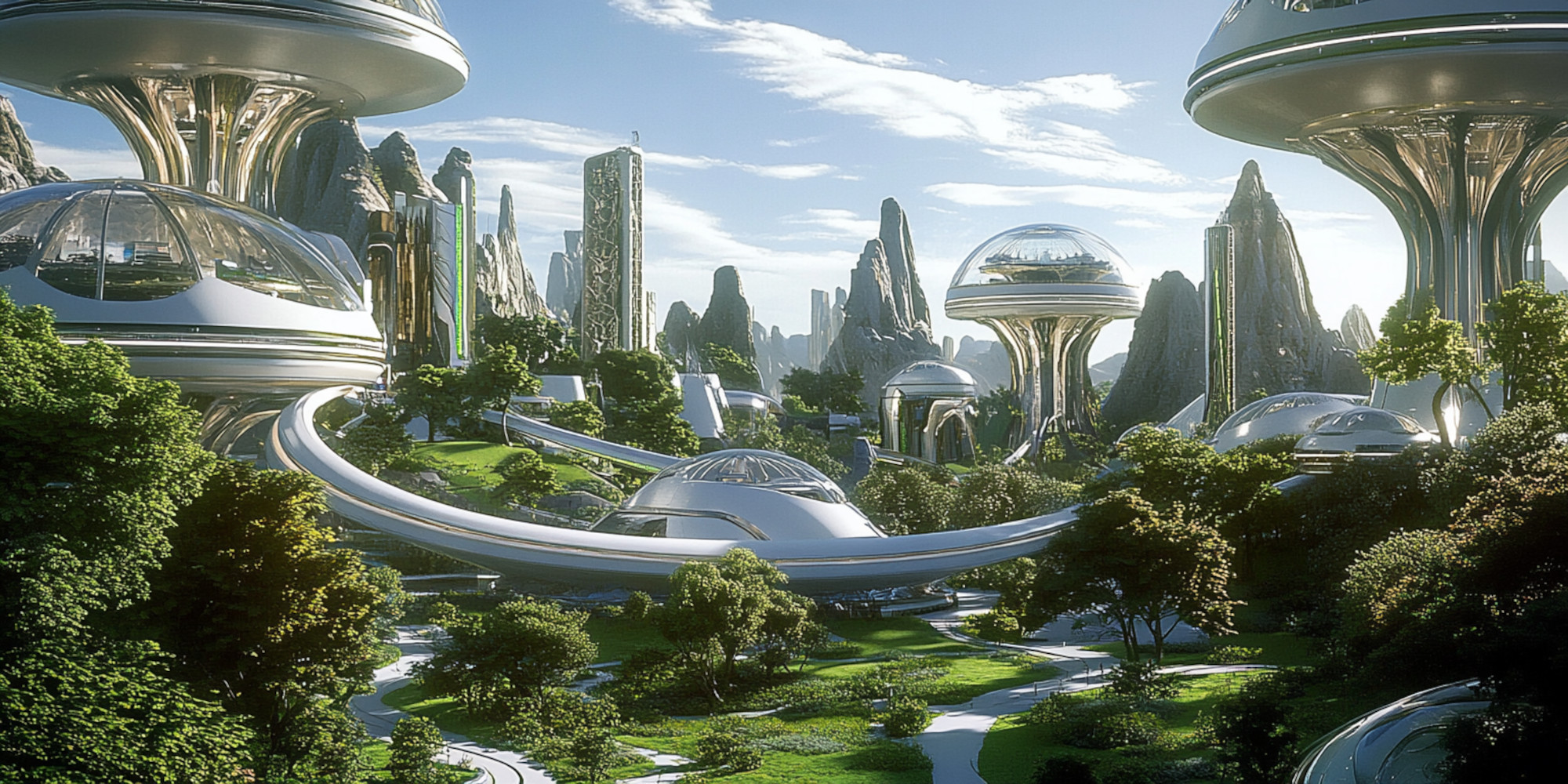
Earth is broken, but not dead.
Communities are damaged, but not hopeless.
People are afraid, but they are still planting gardens, repairing homes, raising children, and forming bonds.
And the cyborgs become part of that rebuilding.
From Soldiers to Protectors
The Protectors came into the universe because post-war Earth needed more than warriors.
After the collapse of civilization, scavenger gangs and marauders began preying on vulnerable settlements. Some communities were making real progress—restoring water systems, repairing buildings, growing food, and forming local leadership—but they still had to worry about gangs sweeping in to take whatever they wanted.
That danger became clear in the Cyborg Awakening timeline, especially as Jolt Somber went out into surviving communities to discover how people were really living. What he found was not just poverty or hardship. He found people trying to rebuild while constantly looking over their shoulders.
They required protection, yes.
But they also needed help.
That is where the Protectors became different from ordinary soldiers. They were trained to defend communities and enforce order, but they were also taught practical skills that mattered in a broken world. They could help repair houses, restore water systems, assess security risks, organize defenses, and support local rebuilding efforts.
Not only that, but they were part law enforcement, part military defense, part mentor, part engineer, and part community anchor.
And honestly? I made a lot of it up as I went along.
That is part of the joy of writing a long-running universe. It is a world that reveals itself one book at a time. A question comes up in one story, and the answer becomes lore in the next. A problem appears in one settlement, and suddenly there is a whole structure of Protectors, Rangers, and Guardians growing naturally from the needs of the world.
The Three Cyborg Series as Rebuilding Phases
Over time, the cyborg universe expanded into different phases of Earth’s recovery.
The Cyborg Awakening stories focus on the early years of rebuilding and the first major awakenings. These cyborgs are stepping into a damaged world and trying to understand what their place in it will be.
The Cyborg Rangers move farther into the frontier. Their world is rougher, more dangerous, and often more volatile. Order is fragile, and the Rangers help push back against lawlessness in territories where survival can depend on strength, loyalty, and quick decisions.
The Cyborg Guardians represent another stage of recovery. These stories are still dangerous, but the focus shifts more toward communities trying to stabilize. The Guardians are not only fighting threats. They are helping people build lives that might last.
That progression was not something I fully mapped out from the beginning. It grew from the emotional logic of the universe.
First, people survive and defend what they have. Then they rebuild and begin to imagine a future. The cyborgs move through that same progression.
Why the Romance Still Comes First
Even with all this lore, the books remain romances at heart.
My cyborgs are devoted to their mates. They are loyal to their friends. They become part of communities, not because they were programmed to do so, but because love teaches them what belonging means.
The genetic mate bond may bring two people together, but it does not replace the emotional journey. Attraction is not the same as trust. Biological compatibility is not the same as building a life. The romance comes from watching two people learn each other, choose each other, and face danger together until the bond becomes more than instinct.
That is why I keep returning to these stories.
A cyborg can be stronger than an ordinary man. He can have enhanced reflexes, reinforced bones, superior endurance, and tactical programming. But none of that gives him a home. None of that teaches him how to be loved or shows him what to do when a woman becomes more important than orders, mission parameters, or survival odds.
Love does that.
World Building Spotlight: The Rise of the Protectors
In the aftermath of the Mesaarkan war, Earth did not have the resources to restore civilization all at once. Large cities became rebuilding hubs, but rural communities were often isolated and vulnerable. Roads were damaged. Communication systems were unreliable. Local governments had collapsed or become too weak to protect their people.
The Protector program developed as a response to those conditions.
Protectors were cyborgs assigned to help stabilize struggling communities. Their duties could include:
- defending settlements from scavenger gangs and raiders
- helping repair water and power systems
- training local defense groups
- restoring order without becoming tyrants
- assisting with construction and infrastructure
- protecting trade routes and supply movement
- identifying genetic mates when proximity triggered the bond
- Collecting DNA from women who wanted cyborg mates to help their fellow cyborgs
This made them different from soldiers fighting a war. Protectors were not sent to conquer. They were sent to help rebuild.
For many of them, that work became the first real life they had ever known.
Closing Thoughts
Building my cyborg romance universe has never been only about enhanced warriors or futuristic technology. It has always been about what comes after devastation.
What happens after the war, abandonment, after civilization breaks? How can love change a man who is created for violence?
My answer, again and again, is this: people rebuild, communities rise, and love survives. Even a cyborg made for war can become someone’s protector, partner, and home.
Want a free cyborg romance?
Join my reader list and get a free sci-fi romance while you explore the Cyborg Universe.