

Free Preview (Chapters 1–2)
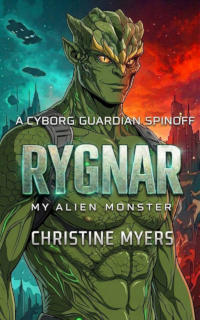
Before you read Rygnar online, I’d like to tell you a little bit more about the story. If you’ve been following my cyborg stories, you already know the world.
A war that nearly destroyed Earth.
Cyborg soldiers created to fight it.
And the promise that if they survived… they would not be alone.
But the war didn’t just leave behind cyborgs.
It left behind something else.
A Different Kind of Warrior
Rygnar is not a cyborg.
He wasn’t created by the Federation.
He wasn’t promised anything.
And yet… he finds himself bound to the same world.
The same aftermath.
The same dangerous pull toward a human woman he should not want.
What to Expect
If you enjoy:
- Fated mates
- Protective, dangerous heroes
- Post-apocalyptic survival
- A touch of monster romance
You’ll find all of that in Rygnar.
About the Book
He never let himself feel anything… until he found her.
She was supposed to be a courier passing through.
He was never meant to need anyone again.
When Lina’s convoy is destroyed, she barely survives the raiders’ attack—until a dangerous alien pulls her from the brink of death.
Rygnar is a deserter. A former warrior who turned his back on an empire that tried to erase humanity. Hidden deep within a mountain sanctuary, he’s built something fragile: a place where humans and Mesaarkans survive together.
He doesn’t expect Lina to change anything.
He’s wrong.
As raiders close in and old enemies resurface, the sanctuary becomes a target—and Lina becomes the spark that could either unite them… or destroy everything Rygnar has fought to protect.
The bond between them was never part of the plan.
But in a broken world, survival isn’t enough anymore.
They must choose: Safety… Or each other.
A steamy sci-fi alien romance featuring:
- Protective alien hero
- Human survivor heroine
- Forced proximity
- Slow-burn to deep emotional bond
- Post-apocalyptic Earth setting
- Found family colony
- Touch-her-and-die energy
In a world rebuilt from ruin… love may be the most dangerous choice of all.
This story takes place in the same world as my Cyborg series—
but follows a very different kind of warrior.
Chapter One
The Ambush
Lina
We were three wagons short of the Colorado line when the horizon went wrong.
From the driver’s bench, I watched two riders appear where there shouldn’t be riders at all—out of a fold of tawny foothills, sun at their backs, hats pulled low, as if they’d grown straight out of the chaparral. Their horses walked like they owned the road. The lead man’s coat flapped open to show a gun belt he wasn’t bothering to hide.
“Traders?” Ben called from the second wagon.
“Maybe,” I lied, and felt the little courier tag beneath my collarbone pulse its steady thump. The tag always felt hotter when I was afraid—as if my own heartbeat had moved outside my body.
The riders reined up in the track and raised a hand. Polite, like they knew the choreography. The surrounding country was all knee-high grass and scattered boulders, the Front Range mountains lifting blue and cold beyond. Nothing moved except a hawk hanging on a single point of sky.
I flicked the safety strap off the pulse pistol under the seat. “Morning,” I said, because that’s what you say when the world pretends at civility.
“Morning.” The lead rider’s smile was lazy and wrong. “Road ahead is washed out. Bad footing for wagons. My crew can guide you around a side trail—small fee, just to keep your stock safe.”
Ben climbed down. I wanted to shout at him to stay put, but the script had him already in motion. “Appreciate the warning,” he said. “We’ve got schedules.”
“That so?” The rider’s smile didn’t reach his eyes. “Schedules and cargo. Which we can help with. Step down now, ma’am,” he added to me, as friendly as poison.
I didn’t move. He was close enough that I could see the nicks on his gun’s grip, the tally marks someone had carved there. The second rider shifted to show the shotgun across his lap.
Behind us, Hale whispered, “Lina?” and I could hear the prayer hiding in my name.
The hawk folded its wings and dropped like a stone.
“Side trail’s north,” the second rider said. “We’ll lead.”
I breathed out through my teeth, buying seconds. “What’s the fee?”
“Everything,” the lead man said pleasantly, and brought the gun up.
I didn’t think. The pulse pistol leapt into my hand—but the shotgun’s muzzle flared first. Ben spun, a red comet’s tail where his shoulder used to be.
The world telescoped—shouting, hooves, the wagons lurching as reins went wild.
I fired at the shotgun man and missed by a bad inch. He kicked sideways and came down swinging; my shot burned a divot in the road and took a sliver out of his stirrup.
“Down!” I yelled to Hale, but he was already falling.
The lead man fired into the air, and that was the signal.
Men spilled out of the grass and rocks like ants from a kicked nest—half a dozen, then more, masks tied at their necks, blades and clubs, and two more guns.
They didn’t rush the cargo.
They rushed me.
I kicked out of the bench, hit gravel, rolled, and came up under the wagon’s belly with my pistol stuttering. One man dropped. Another howled and kept coming anyway. A hand seized my boot and dragged. I twisted and kicked him in the jaw so hard my toes went numb.
Something struck the wagon’s axle. The old wood screamed. Hale’s breath made wet sounds. The lead man laughed like this was a dance he’d rehearsed.
“We know what you carry. Pretty little tags and pretty little maps. You’re worth more than flour and salt.”
My hand went instinctively to my collar. Courier tags weren’t just ID—they held routes and access codes; the kind of information raiders killed for.
I fired until the pistol whined empty.
The lead man stepped close and stomped the pistol out of my hand. “There,” he said. “No more mistakes.”
He grabbed my coat and yanked me into the wrecked sunlight. The road had become a ring of men and dust. The riders’ horses stamped and snorted. The nearest boulder flashed with mica like a million small eyes.
“Let’s make sure you don’t run.”
He shoved me into a rutted ditch. Someone caught my arms from behind. My shins hit stone; sparks shot up my bones. He crouched in front of me, all smell of tobacco and sweat, the grin now a strip of teeth.
“You gonna be smart about this?”
I spat blood at his boots. It felt like the only thing that was mine.
He sighed, almost disappointed. “Didn’t think so.”
He reached for my throat, fingers going for the courier tag cable to rip it free. I thrashed. The man behind me folded me in like a trap, forearm across my windpipe. Sound narrowed to a mosquito whine. Somewhere, a wagon horse screamed and screamed.
Then the air changed.
The hair along my nape prickled. It was like a cold wind moved through the ditch without touching the grass.
The lead man’s grin stuttered. He looked past my shoulder. The men around the ring turned their heads and went very still.
“Who the—” the one behind me started, and his voice cut off with a wet hiccup.
The weight on my throat vanished. I fell forward into the ditch water, coughed, and crawled on my palms. Boots slid in gravel behind me.
A shape moved—wrong in the way a mountain moves when you try to see it while you’re falling.
Tall. Broad across the shoulders. A dark coat that wasn’t cloth at all but some kind of matte armor that drank the light.
The lead man went for his gun.
The shape didn’t shout. It didn’t warn.
He stepped in, caught the man’s wrist, and the gun went off into the sky. His other hand struck the rider’s face once—precise, almost gentle.
The rider folded like a cut rope.
“Two!” someone yelled. “On the flank!”
I saw it through a frame of grass: the stranger—no, the thing—turning. Something like a blade flashed from his forearm. He moved too fast to be human; the world seemed a step behind him, trying to catch up.
Two men rushed with clubs. He slid between them, took one by the throat, and clipped the second at the base of the skull.
No wasted motion. No joy in it.
Only economy.
“Monster,” someone breathed, and my mouth remembered that word even as my eyes fought it.
I got my knees under me and reached for my knife.
A boot kicked it away.
Another man dropped into the ditch after me, grabbing my hair—then screamed and shot backward as the stranger hit him mid-lunge, a black blur and a crack of knuckles.
The ditch water ran pink around my hands.
“Can you stand?”
The voice came from everywhere and nowhere. Low, roughened, with a strange shape to the vowels—like someone speaking through a mask they’d worn too long.
I ripped my gaze up.
He was close enough now to see the lines of him: armor fitted over a body built for fighting and then punished for it, an odd jointing at the shoulders where plates met, and a helm that hid his eyes behind a dark, slanted lens. His jaw, bare beneath the helm’s lower edge, was a map of small, silvered scars.
“Can you stand?” he asked again, softer.
I nodded because my mouth didn’t trust me yet.
He reached—slowly, palm up—and I flinched before I could stop it.
He froze.
Then he turned his hand so I could see it wasn’t a weapon.
The skin there wasn’t like ours. Darker, patterned—scaled in a way that caught the light like polished stone. Not slick. Not reptile.
Something else.
Something alive.
Behind him, a gun cocked.
He pivoted faster than a blink, body angling to shield me.
The shotgun’s roar punched the ditch.
His shoulder jerked; his armor took most of the blast, but blood spilled dark down the seam.
He didn’t make a sound.
He just moved—low and lethal—and the shotgun man went down clutching his throat, surprised to find it empty of air.
Silence fell like ash.
My ears rang. The only sound left was a horse’s quaking breath and my own ugly rasp.
The stranger turned back to me, blood seeping along his upper arm. He reached again—careful, telegraphing every inch.
When I let him, his hand wrapped my forearm with a pressure that would have been tender if not for the steadiness of it. He pulled me up out of the ditch like I weighed less than the shadows.
“More will come,” he said. “We must move.”
“Ben—” I staggered. Ben lay where the shotgun had put him, eyes open to a sky that was suddenly too bright. I took a breath that hurt. “We can’t—”
He looked, and there was something in the angle of his head—a slight bow that might have been respect.
“I am sorry,” he said simply. “We cannot stay.”
“What are you?” It slipped out raw, ridiculous.
His helm tilted. “Rygnar,” he said, as if that answered everything. Then, gentler: “I will not harm you.”
The raider leader groaned and rolled.
Rygnar’s gaze flicked toward the sound. He released my arm and scooped up a fallen cloak. He shook it once and tossed it over the man’s face—not to hide him, but to keep dust out of his mouth.
Monster, my frightened brain insisted, even as the rest of me watched a man do a small kindness for an enemy.
“Can you walk?” he asked.
“I can run,” I said, surprising myself.
“Good.”
He stooped to snatch up my dropped knife and set it in my palm, handle-first.
“Keep this,” he said quietly. “If you need to use it on me, aim for the throat. Here.” He tapped a seam where armor met skin.
I stared at him. “Why would you tell me that?”
His mouth did something like a smile, brief and tired. “Because you are afraid. And because I do not want to be what he called me.”
Another horse screamed, farther away.
Rygnar’s head snapped up. “Now.”
We ran.
The road fell away behind us, and the foothills took us in—rough and rising. He chose a line that wasn’t a trail so much as a suggestion: up a dry wash, through stands of cedar, over a rib of rock that scraped my palms raw.
Twice he steadied me with a hand at my elbow, and twice he took it away before the touch became anything else.
We climbed until the wind tasted like snow.
The land opened suddenly at a lip of stone. The Front Range surged up in a jagged wall of blue ice and pine, the sky above it a hard white.
Rygnar scanned the lower slopes, quick and methodical. Satisfied, he gestured toward a dark seam in the cliff face barely wider than a wagon plank.
“Shelter,” he said. “For tonight.”
I hesitated at the seam, chest heaving, heart doing the rabbit-against-snare thing it does when death brushes by and then doesn’t take you.
My hand brushed the courier tag through my shirt. It pulsed back.
“Wait,” I said. “I have to—”
I fumbled under the collar, found the tiny pressure switch, and killed the signal.
The tag went cold, and I almost cried from the hush that fell inside me.
Rygnar watched, that still way of his like a held breath.
“Good,” he said. “Clever.”
“Not clever enough,” I said, and stepped into the seam of stone.
He followed.
The world narrowed to stone and the whisper of our boots.
For a long time, there was only our breathing and the faint drip of water—the old bones of the mountain taking us in like we were small and unimportant.
Like we were safe.
I didn’t believe in safe.
But I kept walking.
Chapter Two
Storm-Run
Rygnar
The human moves like someone who has run a long time and has finally run out of road. She keeps pace anyway, jaw set, shoulders a thin line of stubbornness beneath the torn coat.
She does not ask again what I am. Good. There will be time for questions later, if we are not dead.
The seam in the stone opens after fifty paces into a narrow artery, then a pocket. I learned about this place years ago while mapping rock density for the tunneling crew. No one comes here because there is nothing to find—unless you know how to listen. The mountain hums if you let it. I have always heard that song.
I shrugged off my pack and set it on the ground to open it. Pulling out a small lantern, I set it on a ledge and adjust the light to a low gold.
The pocket is scarcely a room—two body lengths across, one and a half deep. The ceiling slopes low enough that my helm brushes it. On the far side, a crack draws a ribbon of air—good. We will not suffocate. The smell of old, damp stone settles in my lungs, calm as rain.
“Sit,” I say, and kneel beside the pack.
She doesn’t argue. Her hands shake as she lowers herself to the floor. Adrenaline. Shock. She tucks her knees in and watches me with eyes that have not yet decided whether I am a rescuer or a catastrophe.
The blood on my shoulder is warm where the pellets found a seam instead of a plate. I open the med kit one-handed, shrugging out of the coat. The sticky pull at my bicep tells me I will need to cut the sleeve away.
“Let me,” the human says. She is already on her knees, moving toward me—then flinching at her own impulse.
I keep very still.
She uses the small knife I gave her. The blade is sharp; she cuts the material carefully. I feel the sting of air, then the cooler sting of gel as I spread it over the pellets and pry them out with the tweezers.
“Can I—” She stops herself, searching my face for permission. “Can I hold this light?”
I tilt the lantern toward her. “Yes.”
She holds it steady, the tremor in her hands quieting as a task gives them purpose.
I dig three pellets out—small lead mouths that had begun to kiss the muscle. I drop them in a tin and seal the skin with a thin line of polymer that tastes like clover and iron.
My hands do not shake. They never do while I am working.
When I am done, I sit back against the stone and exhale through my teeth. The room lists a fraction until my blood recovers. I drink water and pass the canteen to her.
She drinks and does not pretend the swallow doesn’t hurt.
“Thank you,” she says. The words are plain and heavy as stones.
“You are welcome.” I slide the tin away. “Your turn.”
“My—?” The word breaks as she tries to stand. Pain puts her back down hard. Her ankle is already swelling against the boot leather.
“Sprain. Maybe worse.” I gesture. “Foot.”
She hesitates, then unlaces the boot with little gasps of breath she tries to hide.
I ease the leather away and work the sock loose. The joint puffs and blooms under the skin like a storm cloud. I press along the bone carefully with my thumb.
She makes a sound between a hiss and a curse when I find the tenderest line.
“Not broken,” I say, and she sags as if I have told her the war is over. “But you will not run on it tonight.”
I spray the joint with numbing frost and wrap it in an elastic bandage, anchoring it with a strip of adhesive.
When I look up, she is watching my hands the way people watch knives—the way they watch a surgeon’s hands when the decision is already made.
“You’ve done this,” she says softly. “A lot.”
“Yes.”
“For humans.”
“And my own.” I pull the boot back on, loose. “Pain is not picky about species.”
Something loosens in her face. It changes the shape of her mouth and the angle of her eyes. She is very young in this light—and old in the set of her shoulders.
“I’m Lina,” she says after a moment, like a bridge she chooses to build. “Lina Carter. CRENA courier.” Her fingers touch the hollow at her collarbone where the tag lies dark now. “Was.”
“Rygnar,” I answer. She already knows my name, but names have weight when you give them; it matters that I do. “No longer a soldier. Miner. Medic, sometimes.”
“Sometimes,” she repeats.
Her mouth learns my name without saying it—lips shaping the consonants, teeth catching the unfamiliar sharp in the middle. There is no fear in the mimicry. Only curiosity.
It is a good sign.
Outside, the wind changes key—lower, wetter. The seam behind us draws a damp breath. The storm will arrive before full dark.
“Eat,” I say.
I pull dried meat and hard bread from the pack, break both into smaller pieces, and put them in her hands so she does not have to ask.
She eats like a person who has remembered she should.
I force myself to do the same.
Fuel now. Questions later.
When we are done, I lower the lantern and set a heat canister between us. It throws a small circle of warmth that smells faintly of resin.
The human wraps her arms around herself—then stops, embarrassed at being cold in front of a stranger.
I unsling the outer scarf from my kit and offer it across the heat.
She blinks. “You’ll—?”
“I do not get cold as you do,” I say.
That is true enough.
She takes it. Her fingers brush mine accidentally.
Reflex sets my spine like a bowstring—old controls snapping into place: do not crowd, do not startle, do not move fast.
She notices. Of course she does.
Her gaze flickers to my throat.
She has good instincts.
“Back there,” she says after a while, voice small in the dim, “you told me where to aim. If I had to.”
“Yes.”
“Why?”
Because I would rather be cut by you than become the thing he named me.
“Because you were afraid,” I say instead. “And I did not want you to have to guess.”
She nods slowly, like the answer is a shape she can hold.
The heat canister clicks softly. The mountain settles and creaks.
“Those men,” she says. “They weren’t traders. They knew about courier tags. They said I was worth more than salt.”
Rygnar’s story is just beginning.
Continue reading in Kindle Unlimited:
April 17th